
The Trump administration has embarked on a systematic and aggressive immigration enforcement campaign, which has resulted in an unprecedented number of visa cancellations targeting international visitors and, critically, foreign students. The government has confirmed that since President Donald Trump took office on January 20, 2025, more than 8,000 F-1 student visas have been revoked, signaling a profound shift in how the United States approaches the international education sector and non-immigrant compliance.
This targeted cancellation of student visas forms a significant portion—approximately 10%—of the administration’s overall visa crackdown, which has resulted in the revocation of over 80,000 non-immigrant visas across all categories so far this year. This total figure represents more than double the number of U.S. visas cancelled in the previous year, underscoring a clear and forceful policy redirection that prioritizes strict enforcement and national security mandates above traditional norms of educational diplomacy, driven by the U.S. Department of State.
The Justification: Prioritizing “Safety and Interests”
According to officials from the U.S. State Department, the rationale behind this surge in revocations centers on indications of “potential ineligibility.” The department has broad discretion to revoke a visa at any time based on information suggesting a traveler may pose a threat or have violated the terms of their stay.
The data released by the agency highlights a clear focus on criminal activity:
- Criminal Offenses: Assault, theft, and driving under the influence (DUIs) collectively account for nearly half of all non-immigrant visa revocations (including student visas) this year. The State Department has specifically cited approximately 16,000 visas pulled for DUIs, 12,000 for assaults, and 8,000 for thefts.
- Other Ineligibility Factors: Other reasons cited for the overall cancellations include indicators of an overstay, being deemed a threat to public safety, engaging in any form of terrorist activity, or providing support to a terrorist organization.
The administration, through its social media channels, made its policy clear: “Promises made, promises kept,” announcing that President Trump and Secretary of State Marco Rubio would “always put the safety and interests of the American people first.”
The Dual Threat: Enforcement and Political Speech
Beyond addressing criminal activity, the administration’s actions have targeted international students based on political and expressive activities, creating a chilling effect across U.S. universities.
Arrests and Deportations for Advocacy
Throughout the year, the administration has taken high-profile actions against international students engaging in pro-Palestinian advocacy. These arrests and detentions generated widespread uncertainty and fear, as international students, who are highly dependent on maintaining legal status, found themselves in confrontation with federal enforcement:
- Landmark Ruling (September 30, 2025): A landmark court ruling found that the administration’s arrests and deportations of international students for engaging in protected pro-Palestinian advocacy were illegal. The court explicitly declared that non-immigrants possess “unequivocal” rights to free expression while on U.S. soil.
- Government Appeal: The government immediately responded by announcing it would appeal the decision. Previously, the administration had justified these detentions under an early directive vowing to take “forceful and unprecedented” steps to combat antisemitism on college campuses.
- Read also:-
- Your Complete Guide to Getting a Swedish Residence Permit as a Self-Employed Entrepreneur
- How to Apply for Sweden’s EU Blue Card: Step-by-Step
- How to get a Swedish Schengen Visa (90-Day Visitor)
- How to get a Portugal Schengen Visa
Tighter Vetting and Application Difficulty
The revocation figures are supported by parallel actions designed to make it more difficult to obtain a U.S. visa in the first place:
- Social Media Vetting: The implementation of tighter social media vetting and expanded screening processes has created a bottleneck in visa processing.
- Appointment Suspensions: A near month-long suspension of student visa appointments at U.S. embassies earlier this year caused severe disruption, heavily impacting the country’s largest sending markets: India, China, and Nigeria. This unpredictability further damages the U.S.’s reputation as a reliable destination for international study.

The Critical Difference: Visa Revocation vs. SEVIS Termination
It is essential for international students and visa holders to understand the two distinct parts of their status:
- Visa Revocation: The revocation of a visa by the State Department only impacts a person’s ability to re-enter the country. If the student is already physically present in the U.S., they are not immediately deported, as their I-20 form and SEVIS status remain active.
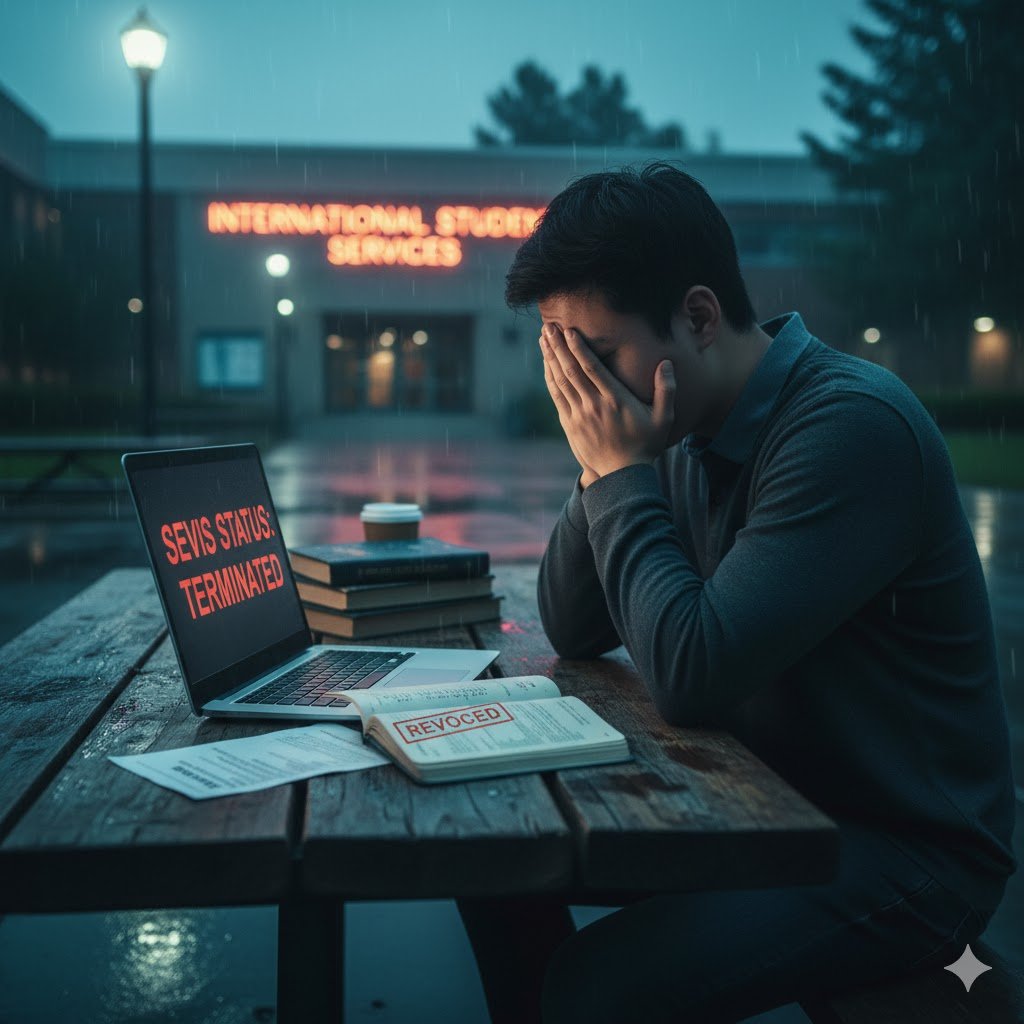
- SEVIS Termination: The SEVIS (Student and Exchange Visitor Information System) status is what legally permits a student to remain in the U.S. and attend classes.
The Trump administration has exploited this distinction. This spring, the government temporarily terminated thousands of students’ SEVIS records—a highly disruptive action that was later reversed in a shock policy U-turn. Following this reversal, the government proposed expanding the powers of Immigration and Customs Enforcement (ICE) to enable them to cancel a student’s legal SEVIS status if the visa used to enter the U.S. is revoked. While this proposal has not yet been announced as official policy, it demonstrates the administration’s intent to link visa revocation directly to loss of legal status, significantly increasing the risk for students.
The Deterrent Effect and University Concerns
Traditionally, student visa revocations were not common, lending international students a degree of certainty. The sudden, high volume of revocations, coupled with the arrests related to political speech, has created a “climate of fear and uncertainty on US campuses,” according to Zuzana Cepla Wootson, deputy director of federal policy at the Presidents’ Alliance.
This atmosphere is widely expected to deter future international students and scholars from choosing the U.S. If left unchecked, this could have severe financial implications for American higher education institutions, which rely heavily on international student tuition fees. The actions are seen as “chilling the free exchange of ideas and isolating international students and scholars,” making the U.S. a less attractive and less predictable destination globally.
The current policy trend confirms the Trump administration’s commitment to a broad, security-focused immigration crackdown that views even low-risk non-immigrant categories like students through a lens of enforcement and compliance.