
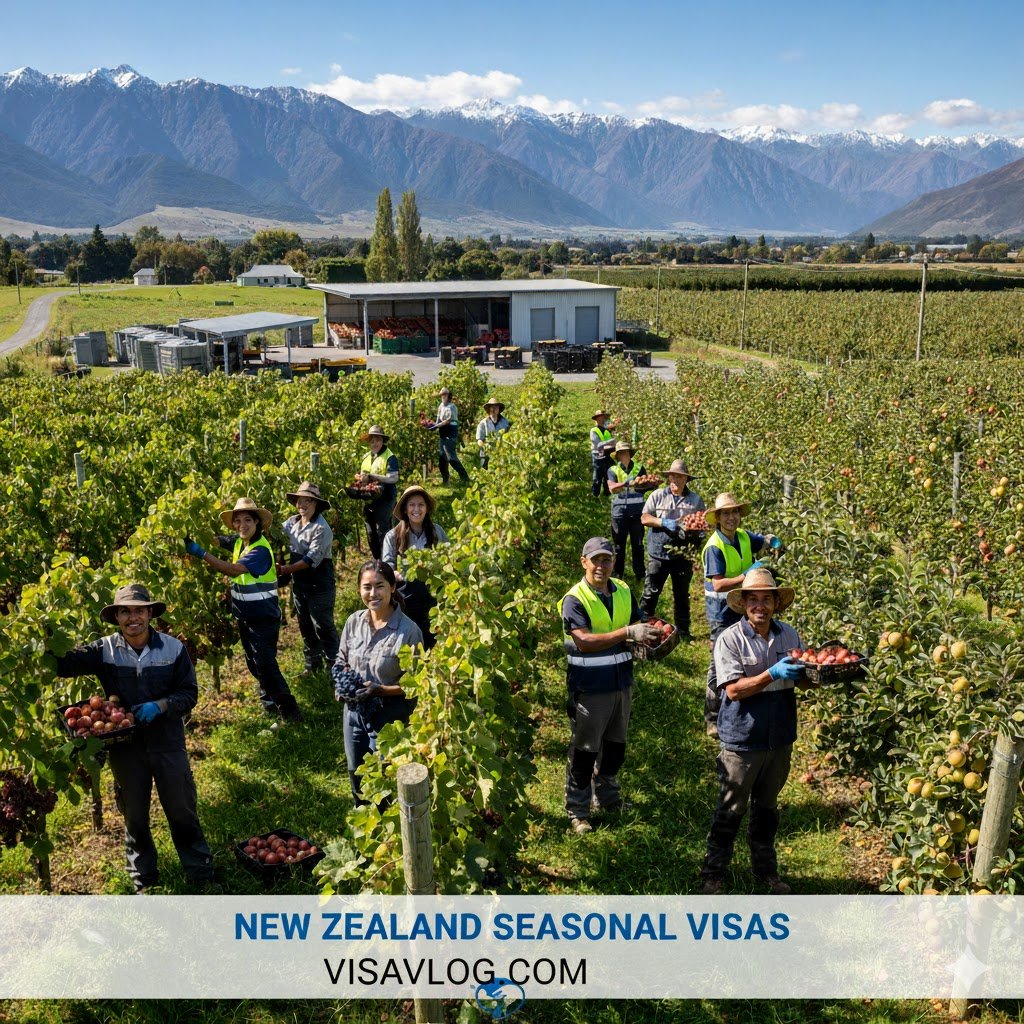

New Zealand is launching a significant update to its seasonal labour policy with the introduction of two new visa pathways designed to address critical workforce demands in sectors like agriculture, horticulture, tourism, and processing. These Global Workforce Seasonal Visa (GWSV) and the Peak Seasonal Visa (PSV) operate under the established Accredited Employer Work Visa (AEWV) framework.
The new categories are scheduled to open for applications on 8 December 2025, streamlining the hiring process for accredited employers and offering structured opportunities for international workers.
Understanding the New Seasonal Visa Pathways
The two new visas cater to different skill levels and seasonal needs, ensuring businesses can access the right workers for their specific demands.
1. The Global Workforce Seasonal Visa (GWSV)
The GWSV is designed for highly skilled and experienced seasonal workers, providing a long-term pathway for specialists to return to New Zealand year after year.
| Feature | Details |
| Purpose | Skilled seasonal roles in industries like agriculture, wine production, and specialised tourism. |
| Duration | Up to 3 years (multi-entry visa). |
| Experience Required | At least three seasons of relevant seasonal work experience within the past six years. |
| Seasonal Requirement | Visa holders must spend at least 3 months outside New Zealand each year. |
| Employer Benefit | No Labour Market Test (LMT) is required for approved roles. |
| Language & Transition | No English language requirement. Visa holders can transition to other visa types. |
| Example Roles | Agricultural/Horticultural Mobile Plant Operator, Wine Maker, Senior Cellar Hand, Snow Groomer, Mountain/Glacier Guide. |
2. The Peak Seasonal Visa (PSV)
The PSV is aimed at entry-level or lower-skilled workers needed for shorter, high-intensity periods during peak seasons.
| Feature | Details |
| Purpose | Entry-level or lower-skilled seasonal roles, often in processing or high-demand harvest periods. |
| Duration | Up to 7 months. |
| Experience Required | At least one season of relevant seasonal work experience within the past three years. |
| Stand-Down Period | After the visa expires, the holder must take a 4-month break outside New Zealand before reapplying for another PSV. |
| Health Insurance | Mandatory comprehensive health insurance is required for roles lasting longer than three months. |
| Employer Obligation | The employer must engage with or be endorsed by Work and Income (Labour Market Test required). |
| Example Roles | Mussel or Oyster Farm Worker, Calf Rearer, Meat Boner and Slicer, Seafood Process Worker, Winery Cellar Hand. |

- Read also:-
- Australia: A Nation Built by Migration, Facing New Challenges
- From Student to Skilled Worker: Australia’s Temporary Graduate Visa
- Australia’s Temporary Work Visas: Your Pathway to Work and PR
Eligibility, Global Reach, and The Application Process
1. Who is Eligible? The Global Reach
These new visas reflect a Global Workforce approach. The primary criteria for eligibility focus on the worker’s relevant experience, rather than a restrictive list of nationalities. The schemes are expanding the pool of available workers, incorporating talent from countries across the world.
2. The Application Pathway (How and Where to Apply)
The application process is entirely employer-driven, as both visas fall under the AEWV framework. This means you must secure a job first.
Step 1: Get an Offer from an Accredited Employer
- You must secure a job offer and a signed employment agreement from a New Zealand employer who is Accredited with Immigration New Zealand.
- You can use the official Accredited Employer List to verify your potential employer’s status.
Step 2: The Job Check (Completed by the Employer)
- The employer applies to Immigration New Zealand for a Job Check for the specific role. This ensures the job meets specific criteria (e.g., skill level, seasonal definition, and engaging with Work and Income for PSV roles).
Step 3: The Visa Application (Completed by the Worker)
- Once the employer has a Job Check approval, you, the worker, can apply for the GWSV or PSV visa online.
- Where to Apply: All applications are submitted via the official Immigration New Zealand (INZ) website. A detailed guide on how to apply for a visa online is provided by INZ.
- Required Documentation:
- Job offer details from an accredited employer.
- Proof of Seasonal Work Experience (3 seasons for GWSV, 1 season for PSV).
- Evidence of seasonality and meeting the ‘time out’ requirements (3-month break for GWSV, 4-month stand-down for PSV).
- Proof of comprehensive Health Insurance (for PSV roles over 3 months).
- Health and Character Checks (including full medical and police certificates for GWSV applicants due to the 3-year term).
Key Restrictions to Note
- No Partner or Dependent Visas: These visas do not allow the holder to include or support a partner or dependent children on their application.
- Job Changes: You can change jobs, but only to another role that qualifies under the same visa type (GWSV to GWSV, or PSV to PSV).
- Not a Direct Path to Residence: These are temporary seasonal work visas and do not offer a direct pathway to permanent New Zealand residence.