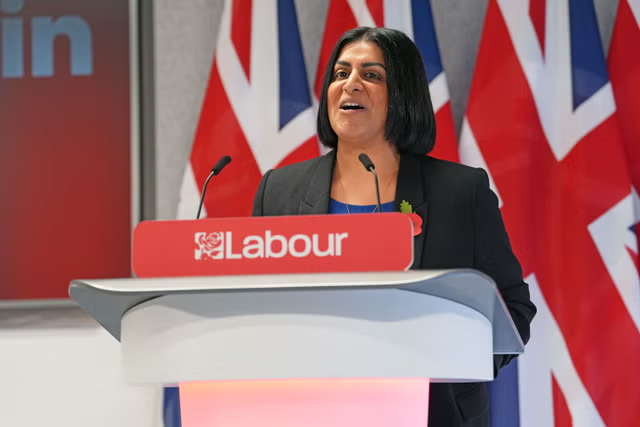


For my readers here at visavlog.com, I constantly emphasize that immigration policy is never static. However, the United Kingdom is currently poised to enact what is being called the largest overhaul of its asylum and immigration system in modern times. My analysis of the impending changes confirms a definitive shift towards a much tougher, more restrictive framework, modeled in part on highly criticized European systems like Denmark’s.
The announced reforms are designed by the government to “restore public trust,” tackle record-high asylum claims, and significantly reduce the incentive for illegal migration, particularly dangerous small-boat crossings.
Step 1: The Permanent Settlement Wait Time Will Skyrocket
This is arguably the most severe change in the package and is aimed squarely at irregular migrants (those arriving via small boats or lorries):
- The Change: Refugees who arrive through illegal or irregular channels will now face a waiting period of 20 years before they become eligible to apply for permanent settlement (Indefinite Leave to Remain) in the U.K.
- The Context: This is a radical increase from the current waiting period, which is typically five years. The new policy means a generation of irregular migrants will live with profound uncertainty, unable to secure their long-term future in Britain for two decades.
Step 2: Ending the Statutory Duty to Provide Automatic Support
The government is moving to end the automatic provision of housing and financial aid for certain asylum seekers, fundamentally altering the safety net.
- The Change: The statutory duty on the government to provide mandatory housing and weekly financial allowances to asylum seekers will be revoked for specific groups.
- Targeted Groups: Support will be removed or denied to asylum seekers who are deemed capable of working but refuse to seek employment, those who fail to comply with removal directions, those who work illegally, or those who engage in criminality.
- The Rationale: This measure prioritizes taxpayer-funded support for those who are seen as “contributing to the economy and local communities,” and is designed to eliminate perceived “automatic handouts” that the government believes incentivize irregular journeys.
- Read more:-
- UK: Increase to maintenance requirements for Students Student and Graduate Visas
- The UK Visitor Visa: A Comprehensive Guide.
- A Detailed Guide to the UK’s Electronic Travel Authorisation (ETA)
- The UK’s New Immigration Turn: ‘Restoring Control’ and the Long Wait for Settlement
Step 3: Asylum Status Will Become Conditional and Temporary
Mirroring policies in Denmark and other European countries, the new system intends to make refugee status temporary, preventing indefinite stays.
- The Change: Asylum status will shift away from automatically granting a clear path to long-term residency. Refugee status will likely be conditional and temporary.
- Impact: If the government later determines that the refugee’s home country has become safe, the individual could face repatriation. This introduces prolonged uncertainty and makes it much more difficult to achieve the final step of obtaining citizenship.
Step 4: Stricter Rules for Family Reunification
Inspired by the Danish model, the path for asylum seekers to bring close relatives to the U.K. is also set to become more challenging.
- The Change: Expect stricter rules for family reunification, making it harder for those granted asylum (especially those who arrived irregularly) to sponsor their spouse, children, or other dependent family members to join them in the U.K.
- The Goal: This measure limits the secondary migration effects often seen after a refugee is granted initial protection.
My Conclusion: A Calculated Deterrent
This package represents the government’s calculated strategy to use policy as a major deterrent. The entire framework shifts the emphasis from compassion and integration to control and immediate removal. While the government argues that these steps are necessary to manage escalating numbers and regain public confidence, the long-term uncertainty created by a 20-year wait for permanent residence and the removal of the housing safety net will place immense pressure on already vulnerable populations.
For anyone planning an immigration journey to the UK—whether through legal channels or seeking asylum—the rules are hardening. It is now more critical than ever to seek qualified legal advice and ensure compliance with every single Immigration Act regulation to safeguard your future.