
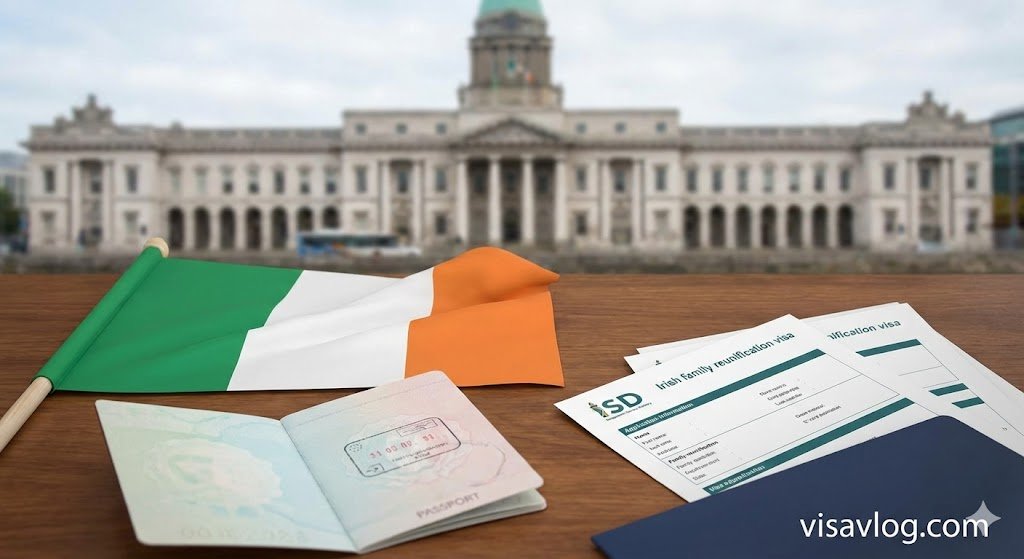

As we move into 2026, Ireland remains a top destination for skilled workers and families. However, bringing your loved ones to join you in the Emerald Isle has become significantly stricter due to recent policy shifts.
If you are an Irish national or a non-EEA resident hoping to sponsor your spouse, children, or elderly parents in 2026, you must navigate complex income thresholds and housing rules. As we previously reported, Ireland is changing its immigration policies, and these changes directly impact family rights.
This guide provides a step-by-step breakdown of the Join Family Visa (Long Stay D), explaining exactly who can apply, the salary you need, and how to navigate the AVATS system in 2026.
1. Who Can Be a Sponsor in 2026?
The “Sponsor” is the person already living in Ireland. Your rights to bring family depend entirely on your current status.
- Category A (Immediate Rights):
- Irish Citizens: You can sponsor immediate family (spouse and children) immediately.
- Critical Skills Employment Permit (CSEP) Holders: If you hold a Green Card/Critical Skills permit, your family can apply to join you immediately.
- Category B (Waiting Period Applies):
- General Employment Permit (GEP) Holders: You must be in Ireland for at least 12 months before you can apply for your family to join you. You must also prove you have a projected income for the coming year.
- Stamp 4 & Stamp 5 Holders: If you have long-term residence, you are eligible to sponsor family, provided you meet the financial tests.
- Read More:-
- How to apply Asylum/International Protection Process in Italy
- Spain: How to take Legal Residency via the Arraigo Program
- Spain Embracing Migration to Secure Economic Future
- Europe to Launch its Digital Border Control System
- Portugal’s Citizenship Path Doubles: New Law Extends Residency to 10 Years
2. The 2026 Financial Requirements
This is the biggest hurdle. The Irish government ensures that incoming families will not rely on public funds.
- For Spouses and Children:
- The sponsor must generally show net earnings above the limits for Family Income Supplement (FIS).
- The 2026 Benchmark: Sponsors are now generally expected to earn above the median industrial wage. While the base guideline was previously €30,000, in practice for 2026, a gross income of roughly €40,000 to €44,000 is often required to ensure approval, especially if you have children.
- For Elderly Parents:
- Bringing parents is exceptionally difficult. You must prove they are financially dependent on you and that you earn a very high income.
- The Threshold: For one parent, you typically need a net income (after tax) of €60,000 per year. For two parents, this rises to €75,000.
3. Housing Requirements
You cannot bring your family into a shared house or an overcrowded situation.
- The Rule: You must provide “suitable accommodation.”
- The Standard: This usually means a private apartment or house where your family has exclusive occupation (not sharing a bathroom/kitchen with strangers).
- Size: A 1-bedroom unit is acceptable for a couple. If you have children, you generally need a 2-bedroom property.
4. Step-by-Step Application Process
Step 1: Complete the AVATS Online Form
All visa applications start online at the official AVATS Online Application Facility.
- Select “Long Stay (D)” visa.
- Select visa type: “Join Family”.
- Select: “Single Entry” (you will get a Multiple Entry card after you register in Ireland).
Step 2: Pay the Visa Fee
Fees are usually paid to the local Embassy or Consulate handling your case.
- Single Entry: €60
- Multi Entry: €100
- Note: Spouses of Irish and EU nationals are often exempt from this fee, but you must check with the local mission.
Step 3: Submit Your Documents
You must print the summary sheet from AVATS and send it along with your original documents (not photocopies) to the relevant office (often the Dublin Visa Office for sponsors in Ireland).
- The “Application Letter”: A signed letter from you detailing your relationship history (when you met, where you lived) and your future plans in Ireland.
- Passport: Valid for at least 12 months.
- Marriage Certificate: Must be notarized or Apostilled.
- Financial Proof: The Sponsor’s P60 (tax summary), 3 recent payslips, and 6 months of bank statements.
- Housing Proof: A Tenancy Agreement or proof of home ownership in Ireland.
Step 4: The Wait
Processing times for 2026 remain long due to high demand.
- Spouses/Children: Expect to wait 6 to 12 months.
- Elderly Parents: Can take 12 to 24 months.
5. After the Visa is Granted
Once your family member receives the “D” Visa sticker in their passport:
- Travel to Ireland: They must present the visa at Border Control.
- Register (IRP): Within 90 days of arrival, they must visit the Registration Office (Burgh Quay in Dublin or a local Garda station).
- Get Stamp 4: Spouses of Critical Skills holders and Irish citizens usually receive Stamp 4 permission, allowing them to work immediately without needing their own permit.
For more details on the specific policy changes affecting these applications, you can review the official Policy Document on Non-EEA Family Reunification.