
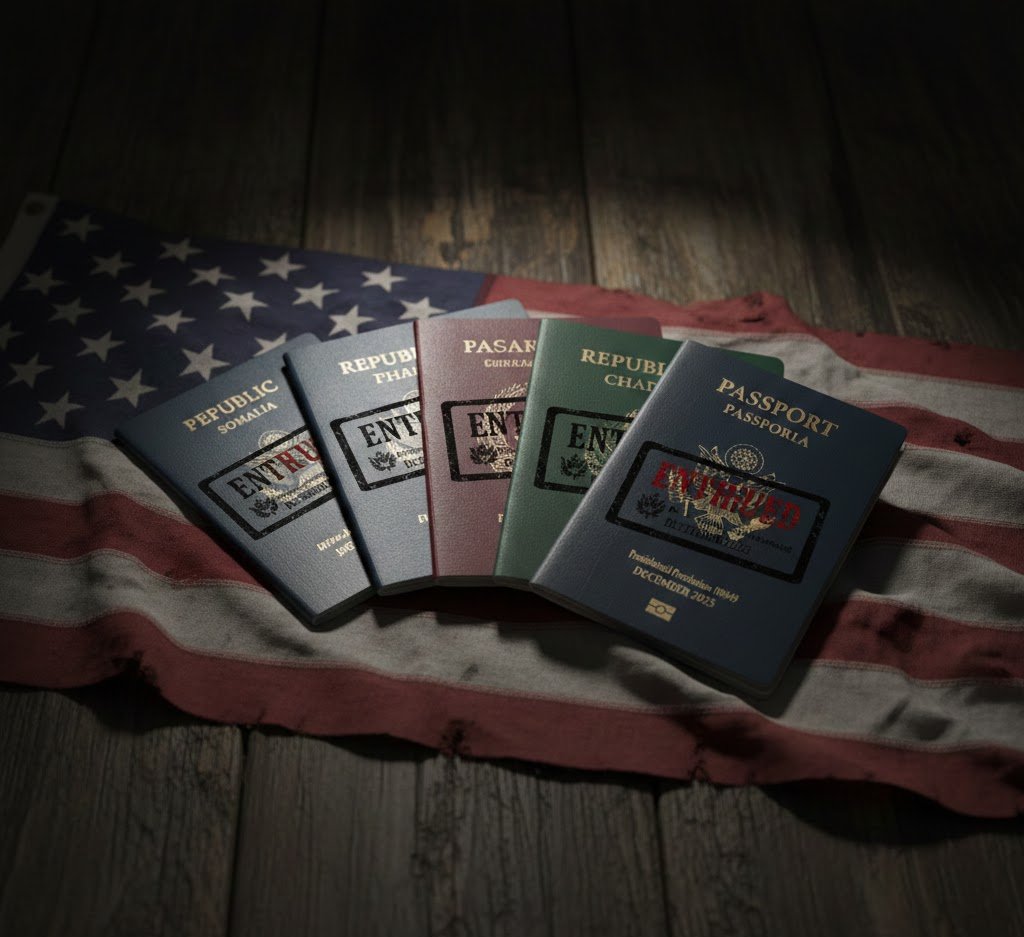

The Seismic Shift in U.S. Immigration: Understanding the Expanded Travel Restrictions and Vetting for 2026
The landscape of U.S. immigration policy is undergoing one of its most rigorous transformations in modern history. Following the issuance of Presidential Proclamation 10949 in June 2025, which initially restricted entry for nationals of 19 countries, the U.S. government has rapidly implemented a subsequent and far-reaching policy that fundamentally alters the process for individuals seeking legal residency, citizenship, or even temporary status in the United States. This aggressive tightening of national security measures, coupled with the administration’s stated intent to expand the list of affected countries to over 30 in early 2026, marks a critical inflection point for global mobility and immigration law. Understanding the history, legal basis, and intricate details of these current and impending restrictions is paramount for anyone involved in the U.S. immigration system.
he Legal Basis for Travel Restrictions
The authority for the President to suspend or restrict the entry of foreign nationals into the United States is rooted in Section 212(f) of the Immigration and Nationality Act (INA). This powerful provision grants the President the power to “suspend the entry of all aliens or any class of aliens” whenever their entry is deemed “detrimental to the interests of the United States.”
- Read more:-
- Trump Administration Launches Review of Green Cards
- How to Fill the DS-160 Form Correctly (Step-by-Step)
- How to Get a U.S. B-1/B-2 Visitor Visa
- Your Easy Guide to the U.S. ESTA Travel Authorization
- U.S. Visa Policy Tightens for Chronic Health Conditions
While past administrations have utilized this authority, the most direct precursor to the current restrictions was the administration’s initial series of actions targeting specific countries. The restrictions put into place in 2025—and the policies shaping 2026—are framed primarily around national security concerns, deficiencies in identity management, and the failure of certain nations to cooperate in accepting the return of their removable nationals.
This framework was formalized with Presidential Proclamation 10949 on June 4, 2025. This document laid the initial groundwork by designating 19 “high-risk” countries. The restrictions were classified into two tiers:
- Full Suspension: Entry of both immigrants and nonimmigrants was fully suspended for 12 countries, including Afghanistan, Myanmar (Burma), Chad, the Republic of Congo, Equatorial Guinea, Eritrea, Haiti, Iran, Libya, Somalia, Sudan, and Yemen.
- Partial Suspension: Entry of immigrants and certain nonimmigrants (B-1/B-2 visitor, F student, M vocational, J exchange visitor) was suspended for seven countries, including Burundi, Cuba, Laos, Sierra Leone, Togo, Turkmenistan, and Venezuela.
For the full details and official text of this policy, interested parties can refer to the Presidential Proclamation on Restricting Entry issued by the White House. This legal basis is the foundation upon which all subsequent measures have been built.
The Immediate Impact: USCIS Pauses and Comprehensive Reviews
In late 2025, the policy’s effect was dramatically amplified, moving beyond entry restrictions at the border and targeting foreign nationals already legally present in the U.S. The U.S. Citizenship and Immigration Services (USCIS) issued a critical Policy Memorandum (PM-602-0192) on December 2, 2025, which mandated a complete hold and review process designed to ensure that all individuals from these high-risk countries “do not present threats to national security or public safety.”
The USCIS memorandum introduced three monumental changes:
- Hold on Pending Benefits: Effective immediately, USCIS placed an adjudicative hold on all pending benefit requests for nationals from the 19 Proclamation 10949 countries. This freeze affects a massive array of critical immigration forms, including applications for Adjustment of Status (Green Cards) (Form I-485), applications for naturalization (N-400 series), petitions to remove conditions on residence (I-751), and requests for advance parole and travel documents (I-131). This holds applies even to those who may have been living in the U.S. legally for many years.
- Re-review of Approved Cases: The agency also directed a comprehensive re-review of previously approved immigration benefits for nationals of the 19 countries who entered the U.S. on or after January 20, 2021. This process includes the potential for mandatory re-interviews, intensive background checks, and, if adverse information is found, referral to Immigration and Customs Enforcement (ICE) or other law enforcement agencies.
- Asylum Adjudication Halt: Critically, the memo also mandated a hold on all pending asylum applications (Form I-589) regardless of the applicant’s country of nationality.
This USCIS policy, found in the official Policy Memorandum, signifies a clear shift toward subjecting existing lawful residents to continuous scrutiny, marking a drastic departure from previous agency operations.
The Looming 2026 Expansion to 30+ Countries
While the existing restrictions already affect tens of thousands of individuals, the original Reuters reporting was centered on the stated plan to dramatically broaden the policy. According to statements from the Department of Homeland Security (DHS), the administration is actively preparing to expand the travel ban list significantly, with plans to include over 30 countries in the first quarter of 2026.
This expansion is based on ongoing reviews of global security threats and national interest. Officials have cited two primary concerns driving the potential expansion list for 2026: countries lacking adequate identity management protocols and nations demonstrating poor cooperation on the repatriation of deported foreign nationals. The implication is that any country failing to meet increasingly stringent U.S. security and intelligence-sharing standards could be added to the list, irrespective of previous diplomatic relationships.
The impending announcement for 2026 travel restrictions ensures that global travelers and immigration practitioners must remain vigilant, as the final list of affected countries and the specific visa categories targeted remain subject to immediate change via a new Presidential Proclamation.
Critical Exceptions and the National Interest Waiver
Despite the broad scope of these restrictions, both the Presidential Proclamation and subsequent guidance acknowledge specific exceptions and the possibility of a National Interest Waiver (NIW).
The official guidance from the Department of State confirms that visa issuance suspensions do not apply to:
- Lawful Permanent Residents (LPRs or Green Card holders).
- Dual nationals traveling on a passport from a non-designated country.
- Certain immediate relatives of U.S. citizens.
- Athletes, coaches, and support staff traveling for major international events, such as the upcoming 2026 World Cup and 2028 Olympics.
Furthermore, consular officers and the Secretary of State maintain the discretionary authority to issue visas on a case-by-case exception basis if the individual’s travel is deemed to serve the U.S. national interest. However, immigration counsel emphasizes that the bar for obtaining such an exception under the new administration is exceptionally high, requiring clear and compelling evidence that the applicant’s admission advances a critical U.S. national interest. Detailed information on these restrictions and limited exceptions is available on the U.S. Department of State website.
The combination of the June 2025 Proclamation, the December 2025 USCIS benefits freeze, and the announced plan to expand the list to over 30 nations in 2026 solidifies a new reality in U.S. immigration. The focus is now comprehensive—targeting both applicants seeking entry abroad and those already settled domestically—under a heightened banner of national security and rigorous, continuous vetting. All foreign nationals and employers must adjust their planning and compliance strategies immediately to navigate this significantly restricted environment for U.S. immigration in 2026.
U.S. Immigration, Travel Ban 2026, Presidential Proclamation 10949, USCIS Policy Alert, Visa Restrictions, National Interest Waiver, Immigration and Nationality Act 212(f), High-Risk Countries, Asylum Hold, U.S. National Security



