
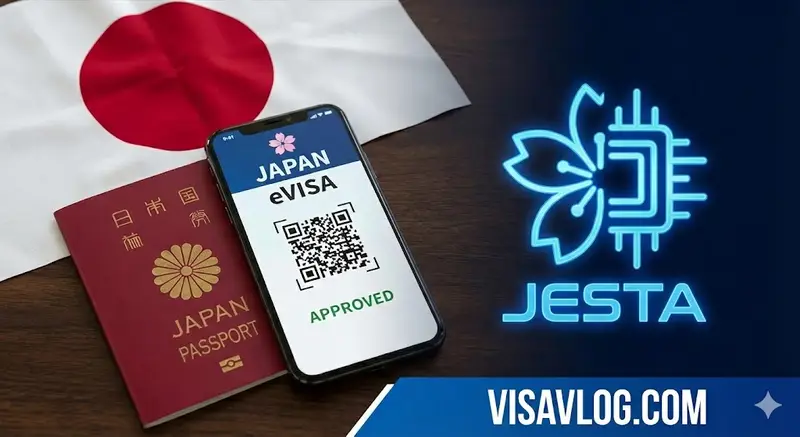

Japan has expanded its eVISA system for 2026 tourism. While USA and UK citizens remain visa-exempt, Indian nationals and Pakistanis in UAE/UK) can now apply online.
As we head into 2026, the Ministry of Foreign Affairs of Japan has significantly modernized its immigration system, moving away from physical visa stickers toward digital clearance. For travelers planning a cherry blossom (Sakura) trip in Spring 2026, understanding the Japan eVISA is critical. There is often confusion about who needs an eVISA versus who is visa-exempt. The rules depend entirely on your nationality and your country of residence. While citizens of Western nations generally enjoy visa-free entry, nationals of countries like India, Pakistan, and Bangladesh face specific new protocols. This guide breaks down the status for all major regions as of December 2025.
1. Visa-Exempt Countries (USA, UK, Canada, Europe)
If you hold a passport from the United States, United Kingdom, Canada, or any European Union (Schengen) country, you DO NOT need an eVISA for short-term tourism (usually up to 90 days).
- Current Status: Visa-Free Entry.
- The Change for 2026: While you do not need a visa, Japan is preparing to launch JESTA (Japan Electronic System for Travel Authorization), similar to the US ESTA. Travelers from these visa-exempt countries should stay alert for announcements regarding mandatory pre-travel online registration starting later in 2026 or 2027.
- Action Required: Currently, just bring your valid passport. No online application is needed yet.
- Read More:-
- New Swedish Crackdown: Must Report Cash Exports to the EU
- Portugal’s Citizenship Path Doubles: New Law Extends Residency to 10 Years
- South Korea Reaching 300,000 International Students Years Ahead of Schedule
- The UK Visitor Visa: A Comprehensive Guide
2. India: eVISA “Result” but VFS “Process” (Critical Clarification)
This is where most confusion happens. Japan now issues Electronic Visas to Indian nationals, meaning you no longer get a sticker in your passport. HOWEVER, you cannot apply for this yourself on your home computer.
- Eligibility: Indian passport holders living in India.
- The Requirement (Mandatory): You must still visit a VFS Global Center or an accredited travel agency to submit your documents. You cannot create a personal account on the Japan eVISA website.
- The Process: You give your documents to the agency > The agency uploads them to the JAPAN eVISA system > You receive a digital “Visa Issuance Notice” on your phone.
- Summary: It is a Digital Visa obtained through an In-Person/Agency Application.
3. Pakistan & Bangladesh: The “Residency” Rule
This is the most critical update for citizens of Pakistan, Bangladesh, Philippines, and Vietnam.
Scenario A: You live in your home country (e.g., Pakistan)
- Status: You are NOT eligible for the direct eVISA if you are applying from Pakistan or Bangladesh.
- Process: You must follow the traditional method: submit your passport and paper application to the Japanese Embassy or Consulate in Islamabad/Dhaka. You will receive a physical visa sticker.
Scenario B: You live in a “Group A” Country (e.g., UAE, UK, USA)
- Status: You ARE eligible for the eVISA.
- The Rule: Japan allows any foreign national (including Pakistanis and Bangladeshis) to apply for an eVISA if they legally reside in specific countries like the UK, USA, Canada, UAE, Saudi Arabia, Australia, or Singapore.
- Example: A Pakistani citizen working in Dubai or a Bangladeshi student in London does not need to visit the Japanese embassy. They can apply for the eVISA online from their country of residence.
4. How the eVISA Process Works (Step-by-Step)
For those eligible (Indians in India, or anyone residing in the eligible third countries), the process is fully digital:
- Apply Online: Submit your application via the official Japan eVISA website or accredited agency.
- Upload Documents: Passport scan, photo, flight itinerary, and proof of funds.
- Receive Notice: Once approved, you get a “Visa Issuance Notice.”
- At the Airport: You must display this notice on your mobile device (internet required). Screenshots or PDFs are NOT accepted. You must log in to the website live at the immigration counter.
5. Detailed Breakdown by Region
To ensure clarity for all our readers, here is a specific breakdown of how the eVISA rules apply to different regions in 2026. This is crucial because a single mistake in identifying your “category” can lead to denied boarding.
A. The Middle East (UAE, Saudi Arabia, Qatar)
Residents of Gulf countries are among the biggest beneficiaries of the new system. If you are a foreign resident (Expat) living in the UAE or Saudi Arabia—regardless of whether you hold a Pakistani, Filipino, or Egyptian passport—you can utilize the online visa application portal.
- Key Requirement: You must hold a valid Residency Visa (e.g., Emirates ID or Iqama) that is valid for at least the duration of your trip.
- Family Applications: Families traveling together can submit a group application, but each member must have their own digital “Visa Issuance Notice” generated.
B. Southeast Asia (Philippines, Vietnam, Indonesia)
- Philippines & Vietnam: Nationals residing in their home countries usually need to apply through accredited travel agencies rather than doing it entirely themselves. These agencies handle the JAPAN eVISA submission on your behalf.
- Indonesia: Indonesian e-passport holders are a special category. They can register for a “Visa Waiver” which is different from the standard eVISA. This registration takes place at the Japanese consulate or via specific online channels depending on the current local rules.
C. Europe & North America (Residents)
If you are a student or work permit holder in the UK, USA, Canada, or Germany (but hold a passport from a non-visa-exempt country like Nepal or Sri Lanka), you are fully eligible for the eVISA.
- Proof of Residence: You will need to upload your BRP (Biometric Residence Permit), Green Card, or EU Blue Card during the application process to prove you live in an eligible region.
6. Common Mistakes to Avoid in 2026
The shift to digital visas has created some new pitfalls for travelers. Based on recent reports from December 2025, here are the top errors causing travelers to be turned away at check-in:
- The “Screenshot” Error: We cannot stress this enough. Many travelers screenshot their visa approval to save data. Japanese immigration officers will not accept this. You must have a working internet connection (roaming or airport Wi-Fi) to log into the Ministry of Foreign Affairs website and show the live timer on the notice.
- Name Mismatch: The name on your eVISA application must match the machine-readable zone (MRZ) of your passport exactly. Even a small typo can invalidate the eVISA.
- Wrong Consulate Selection: When applying online, you must select the Japanese mission (Embassy/Consulate) that has jurisdiction over your current address. If you live in Dubai but select “Embassy in Abu Dhabi” while your visa is from Dubai, it might cause administrative delays.
7. Processing Times and Fees
The efficiency of the eVISA system is one of its biggest advantages, but it is not instant.
- Standard Processing: Typically takes 5 business days from the day the application is received.
- Peak Season Warning: During Sakura season (March-April 2026), processing times can stretch to 2-3 weeks. We strongly advise applying at least one month in advance.
- Fees: Fees vary by nationality. Some nationalities (like Indians) may pay a lower fee compared to others. Payment is usually made via credit card on the JAPAN eVISA portal after the visa is approved but before the issuance notice is generated.
Frequently Asked Questions (FAQs)
I am a Pakistani citizen living in Dubai with a valid residency visa. Can I apply for the Japan eVISA online?
Yes, absolutely. Because you are a legal resident of the United Arab Emirates (a Group A eligible country), you are permitted to use the JAPAN eVISA system. You do not need to fly back to Pakistan to apply, nor do you typically need to visit the consulate in person unless specifically called for an interview.
Do US and UK citizens need to apply for this eVISA for a short holiday?
No, they do not. Citizens of the USA, UK, Canada, and EU countries are currently visa-exempt for short-term tourism. You can enter Japan with just your valid passport. However, keep an eye out for future announcements regarding the JESTA system, which may be implemented later in 2026.
Can I present a PDF copy or a screenshot of my “Visa Issuance Notice” at Narita or Haneda airport?
No, this is strictly prohibited. The Japanese immigration authorities require you to log in to the JAPAN eVISA website on your smartphone or tablet in front of the officer. The notice has a dynamic timer that proves it is not a fake screenshot. Ensure you have international roaming or connect to the airport Wi-Fi.
Is the Japan eVISA valid for business meetings or visiting relatives?
The eVISA is primarily designed for tourism. If you are visiting relatives, attending business conferences, or going for short-term study, the requirements might differ. In many cases, “Visiting Relatives” requires a physical visa application with an invitation letter, though some regions are testing eVISA expansion for this category. Always check the MOFA eVISA Guide for the latest allowed activities.
I made a mistake on my eVISA application and submitted it. Can I edit it?
No, you cannot edit a submitted application. If you realize you made an error (like a misspelled name or wrong passport number), you must cancel the application and submit a brand new one. This is why double-checking your details against your passport is vital before hitting submit.
I am an Indian national living in New Delhi. Can I apply for the eVISA directly from my home computer?
No. While you are eligible for an eVISA, Indian nationals residing in India must submit their application through an accredited travel agency or a VFS Global center. The agency will upload your data to the system. You cannot create a personal account on the JAPAN eVISA portal to apply directly yourself; an intermediary is required.
What happens if my eVISA application is rejected? Will I get a refund?
Generally, the visa fee is only charged if the visa is approved. If your application is rejected, you usually do not pay the visa issuance fee, though you might lose any service fees paid to travel agencies. If rejected, you typically cannot apply again for the same purpose for six months, so ensure your first application is perfect.


[…] Japan eVISA System: Full List of Eligible Countries & Rules for Pakistan, India, EU and USA (202… […]
[…] Japan eVISA System: Full List of Eligible Countries & Rules for Pakistan, India, EU and USA (202… […]