
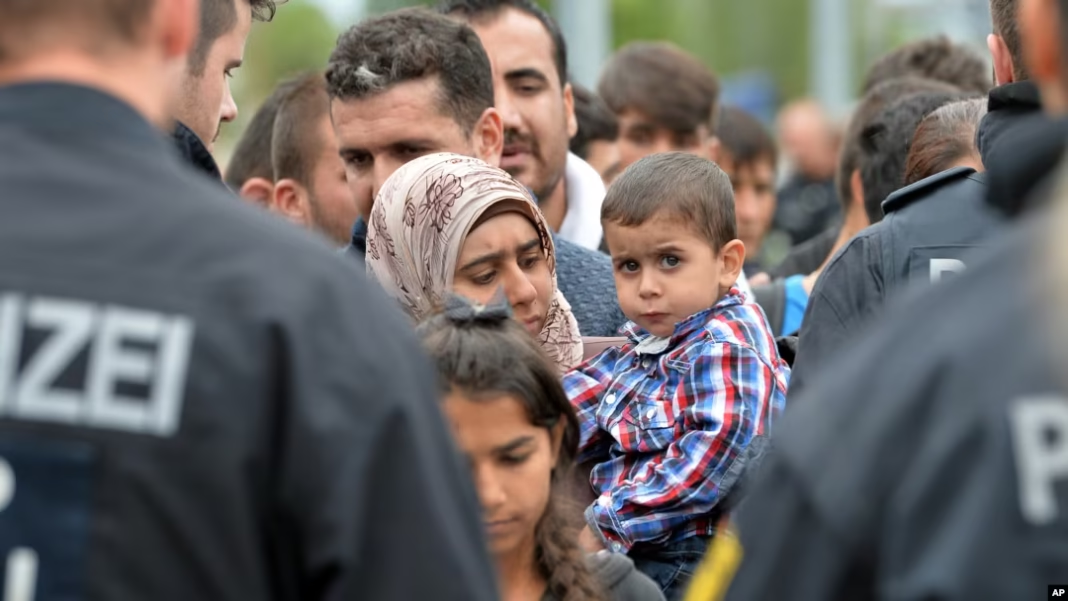

BERLIN/ISLAMABAD—In a controversial and unprecedented move, the German government has initiated a program offering substantial one-time cash payments to Afghan nationals approved for relocation, conditional on their voluntary withdrawal from the Federal Admission Program for vulnerable Afghans. This policy, designed to alleviate severe delays and mounting humanitarian pressure, has drawn sharp criticism from human rights activists.
The offer targets approximately 2,100 vulnerable Afghans, many of whom have been stranded in Pakistan for months, awaiting entry to Germany after having received initial approval under the humanitarian scheme. Reports indicate that about a third of this waiting list has already received the formal cash-out offer via email, with a strict deadline of November 17th, 2025, to make a life-altering decision.
The Financial Incentive and The Permanent Exclusion Clause
The financial packages being offered are significant, intended to serve as a substantial incentive for individuals to abandon their guaranteed path to Germany:
- Pre-Departure Aid: Applicants may receive an initial payment of up to €2,500 while still in Pakistan.
- “Fresh Start” Grant: A larger grant of up to €10,000 is offered after the individual has successfully returned to Afghanistan or traveled to an approved third country.
- In-Kind Support: The package also includes crucial logistical and material support, such as organizational assistance for departure, medical care until the applicant is fit for travel (including maternity care), and transportation.
However, the core condition tied to this payment is a permanent, binding exclusion from ever applying again to the federal admission program. By accepting the funds, these vulnerable individuals formally forfeit all future claims against the German government related to the program.
Political Context and Program History
This drastic step comes months after the conservative government, led by Chancellor Friedrich Merz, took office in May and froze the Afghan admission scheme. The program, initially set up by the previous government, was designed to protect Afghans deemed most at risk under Taliban rule, including:
- Former local employees who worked with German forces.
- Journalists, lawyers, human rights activists, and those involved in civil society.
The official justification given by the German Interior Ministry, currently headed by Alexander Dobrindt, is the lack of time to complete the necessary security checks and transfer procedures before a looming political deadline. Interior Minister Dobrindt publicly defended the policy, stating:
"It is logical that if we assume that people have no possibility of being admitted to Germany, we offer them some perspective and this is linked to making a financial offer for a voluntary return to Afghanistan or another third countr1y."
The move is widely seen as part of a broader political strategy by the conservative government to signal to voters that it is taking a firm stance on curbing migration, a rising concern that has fueled support for the far-right Alternative for Germany (AfD) party.
Humanitarian Crisis and Activist Outcry
The decision has been met with immediate shock and outrage from humanitarian organizations, including Airbridge Kabul, who work directly with the affected Afghans.
- Violation of Principles: Migration rights activists have condemned the plan, arguing that offering money to individuals to forgo promised safety violates fundamental international humanitarian principles.
- Financial Insufficiency: Activists argue that the cash offer, even at the higher end, barely covers the immense costs these individuals already incurred—often selling all their possessions—to flee Afghanistan and survive in Pakistan. For many, safety remains the only priority.
- Risk of Return: The offer essentially pushes these vetted individuals—who were identified as being at particular risk from the Taliban—back to the very country they fled, unless they can secure entry to a third country, which is only possible in “exceptional cases” subject to prior assessment.
Reports from activists like Eva Beyer of Airbridge Kabul confirm the devastating emotional impact, sharing messages from refugees that read: “I’ve been trembling all over and can’t stop crying… I don’t want money or bread, I just want to live in safety.”
The situation for Afghans in Pakistan has been severely aggravated by recent mass deportations ordered by the Pakistani government, putting intense pressure on those awaiting German relocation. Although a temporary “understanding” was reached between Germany and Pakistan to halt the deportation of program participants until the end of 2025, reports of arrests have persisted, adding a layer of fear and desperation to the decision-making process.




[…] Germany Offers Afghans Cash to Exit Resettlement Program […]