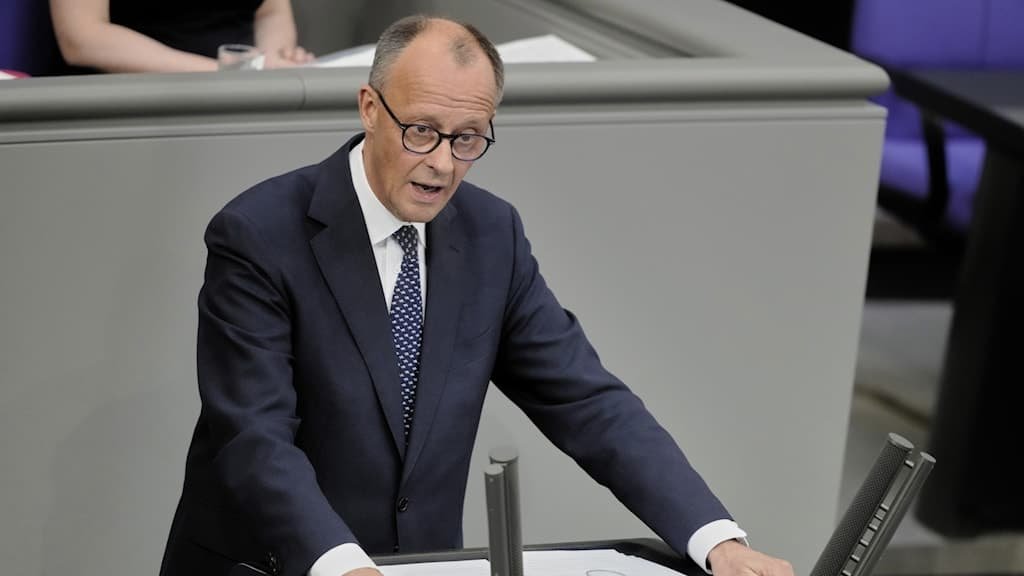

BERLIN—German Chancellor Friedrich Merz announced a significant policy shift this week, declaring that the end of Syria’s 14-year civil war means there are no longer grounds for asylum for Syrians in Germany. He stated that repatriations could begin “in the near future,” a move intended to encourage more than a million Syrians living in the country to return home and assist in national reconstruction.
The Chancellor’s Monday statement follows the fall of Bashar al-Assad’s government 11 months ago, which he and his coalition cabinet cite as the reason the situation has changed since Germany took in more Syrian refugees than any other EU country during the war.
“There are now no longer any grounds for asylum in Germany, and therefore we can also begin with repatriations,” Merz said. He expressed confidence that many of the approximately 1.3 million Syrians in Germany would return voluntarily, but warned that those who refuse could face deportation soon.
Internal Friction and Security Concerns
The announcement has triggered immediate debate within the government, the Christian Democratic Union (CDU), and the wider public, driven by both humanitarian concerns and domestic political pressure.
Foreign Minister Expresses Doubt
The Chancellor’s hard line stance appeared to conflict with remarks made by Foreign Minister Johann Wadephul (CDU) following his recent visit to Damascus. Wadephul voiced doubt that many Syrians would willingly return, citing the massive devastation and ongoing instability that makes a “dignified existence hard to imagine.”
Wadephul, who had previously supported the government’s stricter migration line, faced criticism from some CDU colleagues who argued his comments discouraged the return of crucial personnel needed for Syria’s reconstruction.
On Tuesday, Wadephul attempted to bridge the perceived policy gap, stating he was actively involved in pursuing the government’s shared goal of increasing deportations of migrants, including those from Syria.
Political and Security Context
The migration debate is intensifying ahead of five state elections scheduled for next year, where the anti-immigrant Alternative für Deutschland (AfD) party is highly competitive. The government’s push for repatriations is widely seen as an attempt to counter the AfD’s rise.
The issue gained further urgency over the weekend with the arrest of a 22-year-old Syrian national in Berlin on charges of plotting an Islamist suicide attack, adding fuel to public concerns over security and migration policy. AfD co-leader Alice Weidel seized on Foreign Minister Wadephul’s empathetic comments, calling them “a slap in the face to the victims of Islamist violence.”
The Economic and Human Cost
While the government focuses on legal status and security, many politicians are hesitant to address the potential impact of mass deportations on the German economy:
- Integrated Workforce: Hundreds of thousands of Syrians have successfully integrated, learned the language, and joined the German workforce at a time when the population is rapidly ageing.
- Health Sector Reliance: Over 7,000 Syrian doctors are employed in the health sector, many of whom serve understaffed rural regions.
- Citizenship Status: Approximately one quarter of the 1.3 million Syrians were born in Germany and have established lives there. While many have obtained citizenship, the majority hold only temporary residence permits, making them vulnerable to policy changes.
Merz confirmed on Monday that he had invited Syria’s interim president, Ahmed al-Sharaa, to Germany to discuss coordinating the deportation of Syrians with criminal records—a long-debated issue—before implementing a broader repatriation strategy. The current rate of voluntary returns remains low; only about 1,000 Syrians returned with federal aid in the first half of this year.