
Current as of the 2025-2026 immigration cycle. Visa policies and vetting protocols are subject to change by the U.S. Department of State. Always verify with official government sources provided below.
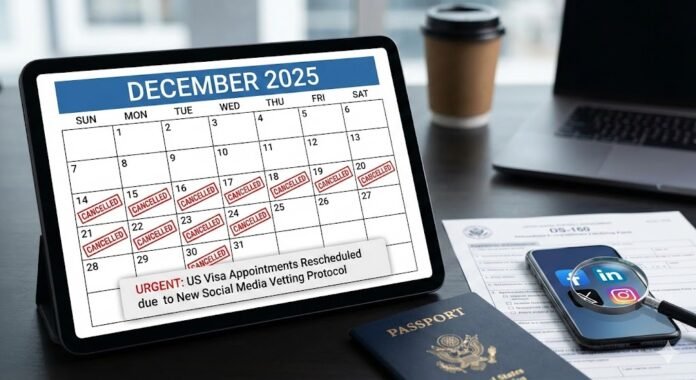
In the landscape of US immigration for 2026, your digital footprint is just as important as your physical passport. With the implementation of stricter social media vetting protocols effective December 2025, Consular Officers are no longer just looking at your bank statements; they are looking at your tweets, your likes, and your professional timeline.
For H-1B workers, students (F-1), and visitors (B-1/B-2) alike, a single inconsistency between your DS-160 form and your LinkedIn profile can trigger a “Section 221(g)” refusal—sending your application into the black hole of Administrative Processing for months.
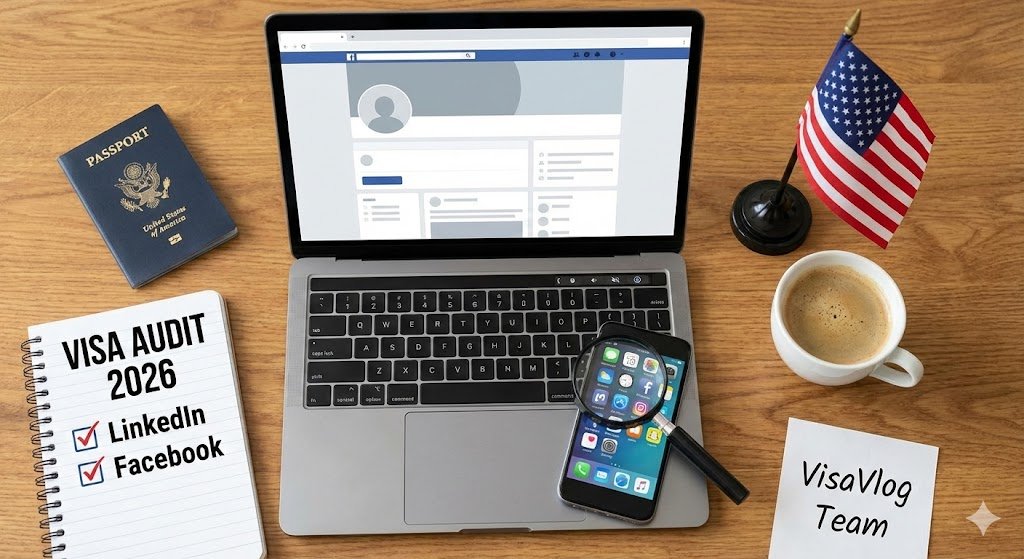
This guide provides a rigorous, step-by-step audit strategy to “visa-proof” your online presence before you step into the US Consulate.
Phase 1: The Inventory (The DS-160 Match)
The first step is to recognize what the US government already knows. Since 2019, the DS-160 and DS-260 forms have required applicants to list all social media handles used in the last five years.
The Golden Rule: You cannot hide an account. If you fail to list a handle that is later found by an automated crawler or an officer, it can be interpreted as a “material misrepresentation” (lying to a federal officer), which carries a potential lifetime ban.
Your Action Item: Create a master list of every platform you have used in the last 5 years. This includes:
- Major Platforms: Facebook, Instagram, X (Twitter), LinkedIn, YouTube.
- Regional Platforms: WeChat, Weibo, VK, TikTok, Douyin.
- Forgotten Accounts: That old Twitter account you haven’t touched since 2022 still counts.
Ensure that every handle on this list matches exactly what you put on your DS-160. If you are preparing to file your DS-160, use this master list to fill it out accurately.
Official Source: U.S. Department of State – DS-160 Information
- Read More:-
- From Student to Skilled Worker: Australia’s Temporary Graduate Visa
- Germany Declares Syrian Asylum Grounds Ended, Deportations Could Begin
- How to Get a U.S. B-1/B-2 Visitor Visa
- Is the UK Adopting Toughest Danish Immigration Model?
- New Fast-Track PR for Temporary Workers: Canada’s 33,000 Transition
Phase 2: The Professional Consistency Check (The “LinkedIn Trap”)
For H-1B, L-1, and O-1 applicants, this is the most common failure point in 2026. Consular officers routinely pull up your LinkedIn profile on a secondary screen while interviewing you.
The Trap: Your DS-160 says you worked at “Company A” from Jan 2020 to Dec 2022. Your LinkedIn profile says “Company A” from Jan 2020 to Present.
- The Officer’s Conclusion: You are either lying on your form, or you are working two jobs unauthorized, or you are “padding” your resume. Any of these is grounds for denial.
The Audit Steps:
- Align Dates: Open your submitted DS-160 (or resume submitted with your petition) on one screen and your LinkedIn/Indeed profiles on another. Every start date, end date, and job title must match exactly.
- Job Duties: Ensure your described skills on social media match the “Specialty Occupation” description in your H-1B petition. If your petition says you are a “Software Engineer,” but your LinkedIn headline says “Crypto Influencer & Part-time Trader,” you are inviting scrutiny regarding your intent and actual employment.
- Education: Verify that your graduation years and degree titles align with your transcripts.
Official Source: USCIS – H-1B Specialty Occupations
Phase 3: The “Federal Law” Sweep (Marijuana & Substances)
This is a critical area where applicants from Canada, parts of Europe, and certain US states get confused.
The Reality: While marijuana may be legal in Canada, California, or New York, it remains Federally Illegal under US law. Immigration is a Federal matter.
The Audit Steps:
- The Photo Scrub: Remove any photos, videos, or “stories” that show you using, holding, or being around marijuana or illegal substances.
- The Dispensary Check: Even visiting a legal dispensary and posting a photo can be used as admission of a “crime involving moral turpitude” or a violation of the Controlled Substances Act.
- Medical Exams: Remember that for immigrant visas, the panel physician will ask about drug use. If your social media contradicts your medical answer, you face a permanent ban for fraud.
Official Source: U.S. Department of State – Ineligibilities and Waivers
Phase 4: Political & Ideological Vetting
The US does not ban you for having political opinions, but they do screen for “activities that could have potentially serious adverse foreign policy consequences” or ties to extremist groups.
The Audit Steps:
- Violence & Threats: Search your history for any keywords related to violence, explosives, or self-harm. Context is often lost in translation. A joke made in bad taste 3 years ago can look like a threat to an officer.
- Radical Groups: Ensure you are not following, liking, or sharing content from organizations designated as terrorist groups or hate groups by the US government.
- Travel History: If you have checked in on Facebook at locations in countries designated as “State Sponsors of Terrorism,” be prepared to explain the purpose of that trip in detail.
Phase 5: Privacy Settings & The “Public Review” Rule
With the 2026 mandate for “Public Profile” reviews, you need a strategy for your privacy settings.
Should I go Private?
- Before the Interview: It is generally acceptable to have private accounts (e.g., a locked Instagram). However, you must still list the handle on the DS-160.
- The Risk: If your account is private, the officer cannot verify your information. Under the new 2026 pressure, they may ask you to unlock your phone or log in (though this is rare and legally complex) or simply place you in administrative processing until you provide public access.
- The Strategy: The safest approach for professional applicants is to sanitize your public profiles rather than locking them down completely. Curate a “clean” public version of your Facebook or Instagram that shows you are a normal, law-abiding tourist or worker. Keep the “Friends Only” section for personal family photos, but ensure nothing illegal is visible there either.
Official Source: U.S. Customs and Border Protection – Social Media Collection
Phase 6: The “Dormant” Account Hazard
Do not ignore accounts you no longer use.
Scenario: You created a Tumblr or a secondary Twitter account in college, posted some angry political rants, and then forgot the password. The Fix: If it is publicly searchable and linked to your name or email, the officer will find it.
- Google Yourself: Run a search on your name, email address, and common usernames.
- Recover & Deactivate: If you find old, embarrassing accounts, recover the password and deactivate or scrub them.
- The “Hacked” Defense: Do not claim an account “isn’t yours” or was “hacked” if it clearly contains your selfies. Honesty is the only policy that works.
Summary Checklist for Your 2026 Audit
Before you head to your appointment at the US Consulate, tick these boxes:
- [ ] Master List: I have listed every handle from the last 5 years.
- [ ] DS-160 Check: My DS-160 handles match my Master List exactly.
- [ ] LinkedIn Sync: My LinkedIn employment dates match my DS-160 and Resume exactly.
- [ ] Drug Scrub: I have removed all references to marijuana or illegal drugs, even if legal in my home country.
- [ ] Radical Scrub: I have removed any content that could be interpreted as violent or extremist.
- [ ] Google Search: I have searched my own name to see what the officer will see.
By treating your social media audit as seriously as your medical exam, you ensure that your digital past does not sabotage your American future.