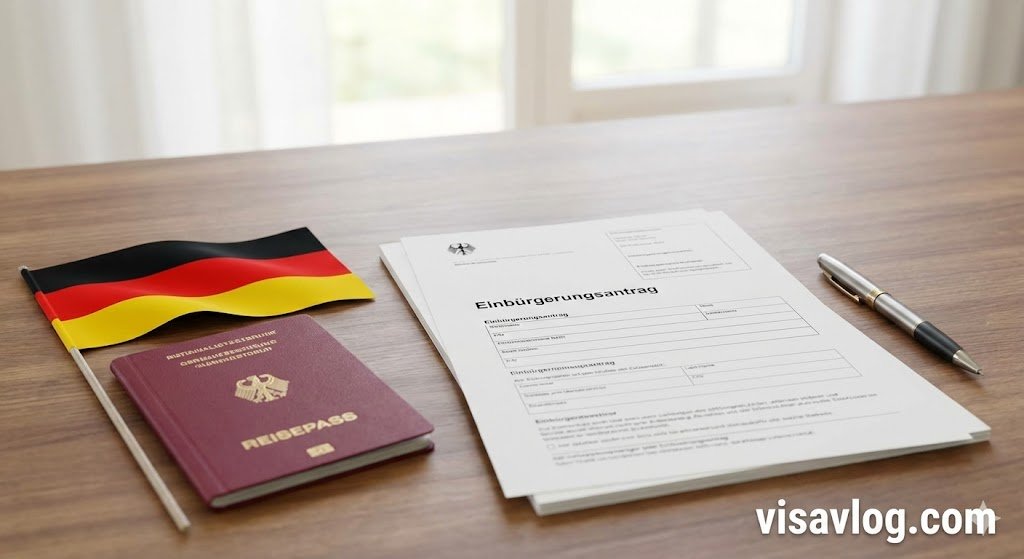

For decades, German citizenship laws were considered some of the strictest in Europe. But as we move into 2026, the landscape has completely changed. Under the Modern Citizenship Law (Staatsangehörigkeitsmodernisierungsgesetz), Germany has rolled out the red carpet for skilled immigrants, allowing them to become citizens faster than ever before.
The days of choosing between your home country’s passport and a German passport are over. In 2026, Dual Citizenship is the new standard.
However, “faster” does not mean “easier.” The bureaucratic hurdles remain high, and the financial requirements are stricter than in previous years. Whether you are a student, a Blue Card holder, or a long-term resident, this guide covers every single requirement, cost, and procedure to obtain your German passport in 2026.
1. The New Timeline: 5 Years is the New Standard
The most significant change in the law is the reduction of the mandatory residence period.
- The Standard Track (5 Years): Previously, you had to live in Germany for 8 years. As of 2026, you can apply for naturalization (Einbürgerung) after just 5 years of legal residence.
- The “Turbo” Track (3 Years): If you are an exceptional achiever, you can become a German citizen in just 3 years. To qualify for this fast track, you must prove:
- C1 Level German language skills.
- Special Integration Achievements: This could be outstanding performance at work, volunteering for a non-profit organization, or high academic success.
- For Spouses: If you are married to a German citizen, you can typically apply after 3 years of residence, provided the marriage has lasted at least 2 years.
Note: The time you spent on a student visa counts fully towards these years, provided you graduated and found work.
2. Dual Citizenship: You No Longer Have to Choose
For many expats, giving up their old passport was a dealbreaker. In 2026, this restriction is history. The German government now allows Multiple Nationality (Mehrstaatigkeit). You do not need to renounce your previous citizenship to become German.
- Important: While Germany allows it, you must check if your home country allows it. Some countries (like India) automatically revoke citizenship if you acquire another one.
3. The Eligibility Requirements
To hold that black-red-gold passport, you must tick every box on this list.
A. Legal Residence Status
You must hold a valid residence title at the time of application. This includes:
- An EU Blue Card.
- A Permanent Residence Permit (Niederlassungserlaubnis).
- A regular residence permit for employment or family reunion.
- Excluded: You generally cannot apply if you are on a temporary visa for studying (you must switch to a work visa first), a toleration permit (Duldung), or a humanitarian visa pending asylum decision.
B. Financial Security (Livelihood)
This is where 2026 rules are strictest. You must prove Secure Livelihood (Lebensunterhaltssicherung).
- The Rule: You must be able to support yourself and your dependent family members without claiming social benefits (like Bürgergeld or social assistance).
- Minimum Salary: There is no fixed number (e.g., €40,000), but the authorities calculate your “need.” Your net income must cover:
- Your Rent (Warm).
- Health Insurance.
- Standard cost of living for all family members.
- Exceptions: Exceptions for receiving benefits are now very rare, mostly limited to the “Guest Worker” generation or former contract workers from the GDR.
C. Language Proficiency
You cannot become German if you don’t speak German.
- Standard Requirement: You need a B1 Level certificate (CEFR).
- Fast Track Requirement: You need C1 Level.
- Where to test: You must take a certified test (e.g., Telc or Goethe) or complete a German Integration Course.
- Tip: If you graduated from a German university or completed vocational training in Germany, your degree/diploma serves as proof of language. You can read more about German University Admissions to see if your degree qualifies.
- Read More:-
- Visa on Arrival Destinations for UAE Residents: A Guide to the Top 8 Countries
- How to get a U.S B-1/B-2 Visitor Visa
- How to get a Swedish Schengen Visa (90-Day Visitor)
- Sweden : Your Guide to the Job Seeker or Startup Visa/Permit
- The UK Visitor Visa: A Comprehensive Guide.
D. The Citizenship Test (Einbürgerungstest)
You must pass a written exam on German laws, society, and history.
- Format: 33 multiple-choice questions. You must answer 17 correctly to pass.
- New 2025/2026 Content: The test has been updated to include specific questions about Germany’s historical responsibility towards Judaism and the state of Israel. Antisemitism is a red line; any sign of it will lead to rejection.
- Exemption: If you graduated from a German school or university in law/social sciences, you might be exempt.
E. Loyalty to the Constitution
You must sign a declaration pledging allegiance to the Free Democratic Basic Order (Freiheitliche demokratische Grundordnung) of the German Basic Law (Grundgesetz). This now includes a specific declaration rejecting antisemitism and racism.
4. How and Where to Apply?
The application process is increasingly digital, especially in major hubs.
Step 1: The “Quick Check” Visit the website of your local Citizenship Authority (Einbürgerungsbehörde). Many cities like Berlin and Munich have an online “Quick Check” tool to see if you are eligible before you apply.
Step 2: Submit Application
- Online: In cities like Berlin, the process is now centralized at the LEA (State Office for Immigration) and is fully digital. You upload PDFs of your passport, B1 certificate, and salary slips.
- Paper: In smaller towns (Landkreis), you may still need to fill out a paper form and mail it.
Step 3: Pay the Fees The cost for naturalization is fixed by federal law:
- Adults: €255 per person.
- Minors (with parents): €51 per child.
- Minors (applying alone): €255.
Step 4: The Wait (Processing Time) This is the hardest part.
- Berlin/Munich/Hamburg: Due to the 2025 law change, thousands of people applied at once. Processing times in major cities can currently take 12 to 18 months.
- Smaller Towns: You might get your certificate in 3 to 6 months.
Step 5: The Ceremony Once approved, you will receive a letter inviting you to a Naturalization Ceremony. You will swear the oath of allegiance, and the officer will hand you your Naturalization Certificate (Einbürgerungsurkunde).
- Congratulations! You are now a German citizen. You can take this paper to the Bürgeramt immediately to order your German Passport and ID Card.
5. Why You Should Apply Now
Even though the waiting times are long, applying in 2026 is strategic. The German Opportunity Card and other skilled worker visas are great, but they are temporary. Citizenship offers you:
- Voting Rights: Have a say in the laws that affect you.
- EU Freedom: Live and work in France, Spain, or anywhere in the EU without a visa.
- Security: You can never be deported, and you never have to visit the Ausländerbehörde again.
Frequently Asked Questions (FAQ)
Do I need a lawyer to apply for citizenship?
No. The process is designed for individuals to do it themselves. However, if your case is complex (e.g., you have a criminal record or gaps in your pension history), a lawyer might help speed up the “Untätigkeitsklage” (failure to act lawsuit) if the authorities take too long.
Does a criminal record stop me from becoming a citizen?
Yes. If you have been sentenced to more than 90 daily rates (Tagessätze) of a fine, or a prison sentence (even suspended), you are generally barred from citizenship. Minor offenses like a small speeding ticket do not count.
Can I apply if I am currently unemployed?
It is very difficult. You must prove you can support yourself. If you are receiving Bürgergeld (unemployment benefits), your application will likely be paused or rejected unless you can prove it is not your fault (e.g., illness or disability).
Do I need to give up my previous nationality?
No, not from the German side. The new 2024/2025 law allows dual citizenship for everyone. However, you must check if your current country allows you to keep their passport.
Is the B1 Language test hard?
B1 is considered “intermediate” usage. You must be able to handle daily situations, understand work instructions, and write simple letters. If you have been working in a German-speaking environment for 5 years, B1 is usually very achievable.