
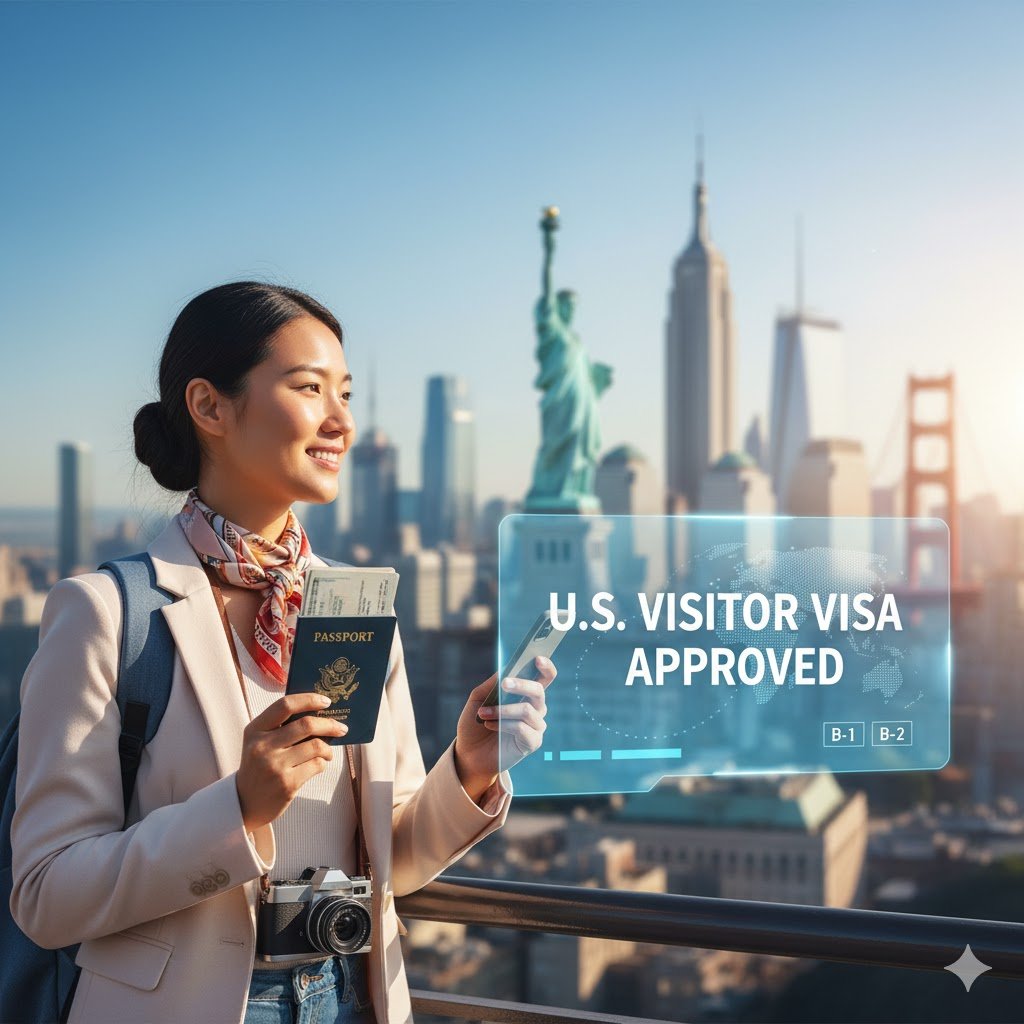

The United States offers non immigrant visas for individuals seeking temporary entry for specific, limited purposes. The most common category for short-term stays is the Visitor Visa, which combines two subcategories: the B-1 Visa (Business) and the B-2 Visa (Tourism). Often, a single visa, the B-1/B-2, is issued to cover both business and pleasure travel.
This column provides a detailed overview of what these visas entail, what activities they permit, the application process, fees, and essential application background information.
1. Background: Business (B-1) vs. Tourism (B-2) Visas
The Visitor Visa category is for individuals who wish to enter the U.S. temporarily and must prove strong ties to their home country, demonstrating that they intend to return after their visit.
- B-1 Visa (Business): This visa is designed for temporary commercial activities. Permitted activities include:
- Consulting with business associates.
- Attending scientific, educational, professional, or business conventions and conferences.
- Negotiating contracts or settling an estate.
- Crucially, the B-1 visa does not permit employment or performing paid services in the U.S.
- B-2 Visa (Tourism/Visit): This is the classic tourist visa. Permitted activities include:
- Tourism and vacation (holiday).
- Visiting friends or relatives.
- Seeking medical treatment.
- Participation in amateur sports or musical events (if unpaid).
- Enrollment in a short recreational course of study, not for credit (e.g., a short cooking class).
- Combined B-1/B-2 Visa: This allows the holder to engage in activities permitted under both categories, offering maximum flexibility for temporary travel.
2. How and Where to Apply for the Visitor Visa
The application process is standardized across the globe, but specific instructions (like fee payment methods) vary by location. The process generally requires the following steps:
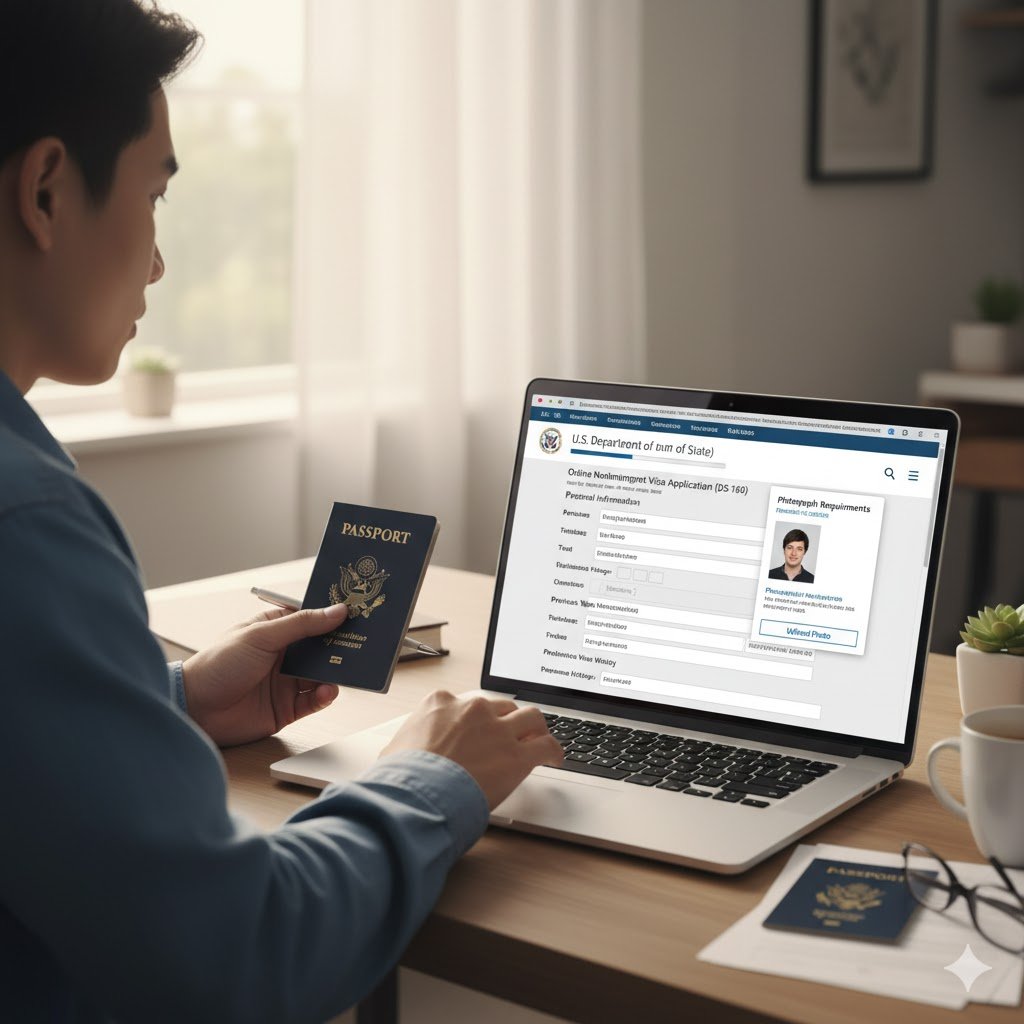
Step 1: Complete the Online Application (Form DS-160)
All applicants must complete the Online Nonimmigrant Visa Application, Form DS-160. This form is extensive and requires detailed personal, travel, and security information. You must upload a photo that meets the official Photograph Requirements during this process and print the confirmation page to bring to your interview.
- Where to Apply: The Form DS-160 is completed and submitted electronically on the Consular Electronic Application Center (CEAC) website.
Step 2: Pay the Fee
You must pay the non-refundable visa application fee before scheduling your interview.
- Application Fee (MRV Fee): The standard, non-refundable fee for the B-1/B-2 visa is currently $185 USD (subject to change by the U.S. Department of State).
- Where to Pay: Fee payment instructions are specific to each country’s U.S. Embassy or Consulate. Check the website of the mission where you plan to apply.
- Read also
- How to check your US immigration case status and find processing times.
- What can you do? IF Your Green Card Application is pending.
- How to apply for a Permanent Residence card . A Comprehensive Guide to Applying for a U.S. Green Card.
- How to get a U.S. Employment-Based Immigrant Visas
- How Birthright Citizenship is Acquired in the USA.
Step 3: Schedule and Attend the Interview
Interviews are generally required for most applicants.
- Where to Schedule: You should schedule your interview at the U.S. Embassy or Consulate in the country where you live. While you may apply elsewhere, demonstrating strong ties to your country of residence is easiest where you reside.
- Required Documentation: In addition to the DS-160 confirmation page and fee receipt, you must bring a passport valid for at least six months beyond your intended stay and be prepared to show evidence of:
- The purpose of your trip.
- Your intent to depart the United States afterward.
- Your ability to pay all costs of the trip (e.g., bank statements, evidence of employment, family ties).
3. Key Application Background Knowledge
When a Consular Officer reviews your B-1/B-2 application, the primary legal presumption they must overcome is that you are an intending immigrant. You must convince the officer that you meet the requirements of U.S. law, specifically by demonstrating:
- The purpose of your visit is strictly temporary.
- You have sufficient funds to cover your expenses while in the U.S.
- You have a residence outside the U.S. and strong social and economic ties that will compel you to return to your home country after your temporary stay.
Important Note: A visa only permits you to travel to a U.S. port-of-entry (like an airport) and request permission to enter. Final admission is granted by U.S. Customs and Border Protection (CBP) officials upon arrival.


[…] How to get a U.S B-1/B-2 Visitor Visa […]