
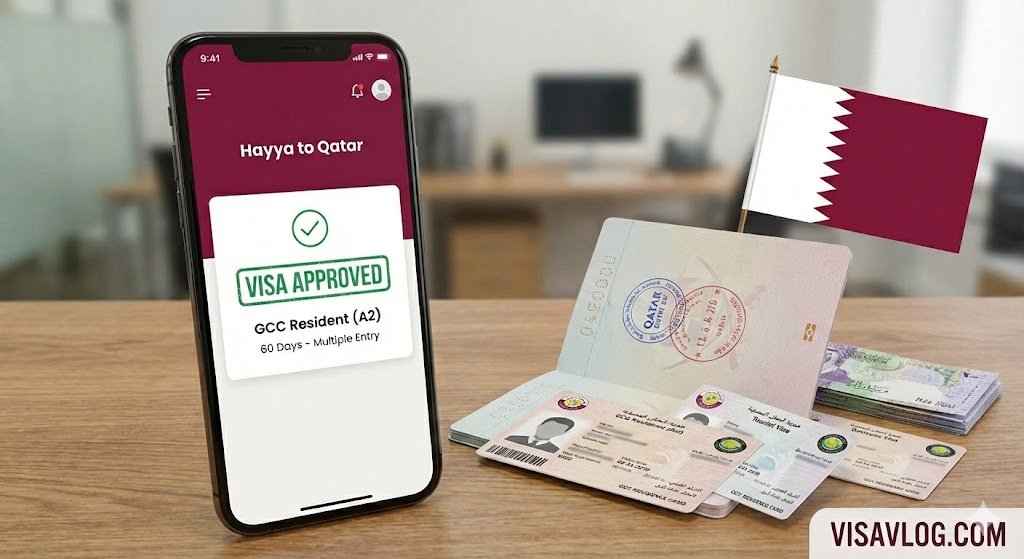

Qatar has officially upgraded the Hayya Visa for GCC residents. Starting December 2025, enjoy a 60-day stay with multiple entry privileges. A complete guide on fees, eligibility, and the new rules for 2026.
In a major move to boost tourism and strengthen ties within the Gulf Cooperation Council (GCC), Qatar has announced a significant upgrade to its popular Hayya Visa system. Effective from November 30, 2025, the rules for GCC residents entering Qatar have changed dramatically, offering unprecedented flexibility and ease of travel.
For the millions of expatriates living in Saudi Arabia, UAE, Kuwait, Oman, and Bahrain—especially citizens of India, Pakistan, and Bangladesh—this is a game-changer. The days of applying for a single-entry visa for a short weekend trip are over.
Here is the complete breakdown of the new Qatar Hayya Visa 2026 rules and how you can take advantage of them immediately.
The Big Change: From 30 Days to 60 Days
Previously, the “Hayya A2” visa for GCC residents allowed for a stay of only 30 days and was typically a single-entry permit. If you left Doha to return to Dubai or Riyadh for work, your visa would expire, and you would have to pay and apply again for your next trip.
The New Rules (Effective Dec 2025):
- Extended Stay: The validity of the stay has been doubled. You can now stay in Qatar for up to 60 days (2 months) per visit.
- Multiple Entry: This is the most critical update. The visa is now Multiple Entry by default. This means you can enter Qatar, stay for a week, go back to your job in Saudi Arabia or the UAE, and return to Qatar later without applying for a new visa, as long as it is within the validity period.
This move is part of Qatar’s strategic preparation for the FIFA Arab Cup 2025 and the winter events season, making it easier for neighbors to visit frequently.
- Read More:
- South Asians Projected to Become Canada’s Largest Immigrant Workforce by 2041
- Harder Than Ever: The Challenges of Being an Immigrant in the USA in 2026
- Sweden Finalizes Bill to Hike Work Permit Salary Threshold to 33,390 SEK by 2026
- New Saudi Labor Laws: Agricultural & Herding Workers Granted 30-Day Paid Leave
- What Happens If You Move to Another Country After Becoming an Italian Citizen?
Eligibility: Who Can Apply?
The new rules apply specifically to the Hayya A2 Visa category. To be eligible, you must meet the following criteria:
- Residency: You must hold a valid residency permit from one of the GCC countries (Saudi Arabia, UAE, Kuwait, Oman, Bahrain).
- Profession: Unlike in the past where only specific “high-level” professions were eligible, the system has become more inclusive. However, your profession must still be listed on your residency ID.
- Passport Validity: Your passport must be valid for at least 6 months at the time of entry.
- Residency Validity: Your GCC residency visa must be valid for at least 3 months.
This is excellent news for those who are also tracking Middle East immigration updates, as it aligns with the broader trend of easing travel restrictions across the region.
Fees and Processing Time
Despite the massive upgrade in benefits (double duration and multiple entry), the authorities have decided not to increase the fees.
- Visa Fee: QAR 100 (approx. $27 USD).
- Insurance: Mandatory health insurance is required, which usually costs an additional QAR 50.
- Processing Time: Most applications are approved within 48 hours, provided there are no issues with your documents.
How to Apply: Step-by-Step Guide
The application process remains 100% digital through the Hayya portal.
- Download the App: Install the “Hayya to Qatar” app or visit the official website.
- Create Profile: Register using your email and upload a clear passport-size photo.
- Select Visa Type: Choose “GCC Resident Visa (A2).”
- Upload Documents:
- Scan of your Passport (First page).
- Scan of your GCC Resident ID (Iqama/Emirates ID).
- Accommodation: You may be asked to provide proof of accommodation. If you are staying with family or friends, they can register as a “Host” on the Hayya platform.
- Payment: Pay the QAR 100 fee using a credit or debit card.
- Receive Approval: Once approved, your Hayya Entry Visa will be sent to your email and appear in the app.
Why This Matters for Expats
For professionals working in the region, this update solves a major headache. Many expatriates often travel for business meetings or short weekend getaways.
For example, if you are working in Saudi Arabia and have just navigated the New Saudi Labor Laws, you might want to spend your new vacation days in Doha. Previously, if an emergency called you back to Riyadh, your Qatar visa would become void upon exit. Now, you can travel back and forth freely.
Similarly, if you are keeping an eye on the Saudi Arabia New 5-Year Resident ID, you will see that Qatar is competing to offer equally attractive mobility options to retain tourism traffic.
A Warning on Skill Tests
While travel is becoming easier, obtaining work visas is becoming harder. As we discussed in our guide on Mandatory Skill Tests for Immigrants, neighboring countries are tightening work entry rules. Do not confuse this Hayya Visit Visa with a Work Visa. You strictly cannot work in Qatar on a Hayya visa. It is for tourism and family visits only.
For a broader look at how visa policies are shifting globally, you can check our comprehensive Visa Guide to compare Qatar’s rules with Europe and North America.
Frequently Asked Questions (FAQs)
Can I use the Hayya A2 Visa to work in Qatar for short-term projects?
No, absolutely not. The Hayya A2 Visa is strictly for tourism, visiting family, and attending events. Engaging in any form of employment (paid or unpaid) is illegal and can lead to immediate deportation and a permanent ban from Qatar. If you need to work, you must apply for a specific Business or Work Visa sponsored by a Qatari company.
I am a GCC resident, but my profession is “Laborer” on my ID. Can I apply?
Generally, the “GCC Resident Visa” category on the Hayya portal is open to most professions, but “Laborer” or unskilled professions often face automatic rejection during the automated screening. It is highly recommended to check your eligibility on the Hayya portal before making any non-refundable travel bookings.
Do I need to book a hotel before applying for the Hayya Visa?
In most cases, yes. The system usually requires “Proof of Accommodation.” This can be a hotel booking (Discover Qatar website is often recommended) or an invitation from a host (family/friend) who is a resident in Qatar. The host must register your stay on their own Hayya app using your passport details.
Is the QAR 100 fee refundable if my visa is rejected?
No, the visa application fee is non-refundable. If your application is rejected due to an invalid document or eligibility issue, the QAR 100 will not be returned to your bank account. Therefore, ensure your passport validity (6 months) and residency validity (3 months) are correct before paying.
Can I bring my family with me using my GCC profession status?
Yes, you can. There is a specific category called “Companion of GCC Citizen” or you can apply for your family members under the “GCC Resident” category if they have their own valid residency IDs. If they are under your sponsorship, you will be the primary applicant, and you can add them as dependents in your application.
Does this visa allow me to visit Saudi Arabia or the UAE as well?
No, this is a Qatar-specific visa. It does not grant you entry to Saudi Arabia or the UAE. However, if you already hold a valid Hayya visa, Saudi Arabia often offers a specific e-visa for Hayya holders, but you must apply for that separately on the Saudi “KSA Visa” platform.
What happens if I overstay the 60-day limit?
Overstaying your visa in Qatar carries strict penalties. You will be fined QAR 200 (approx. $55) for every single day you overstay. You will not be allowed to leave the country until the total fine is paid at the airport immigration office. Repeated violations can lead to a lifetime ban from entering Qatar.