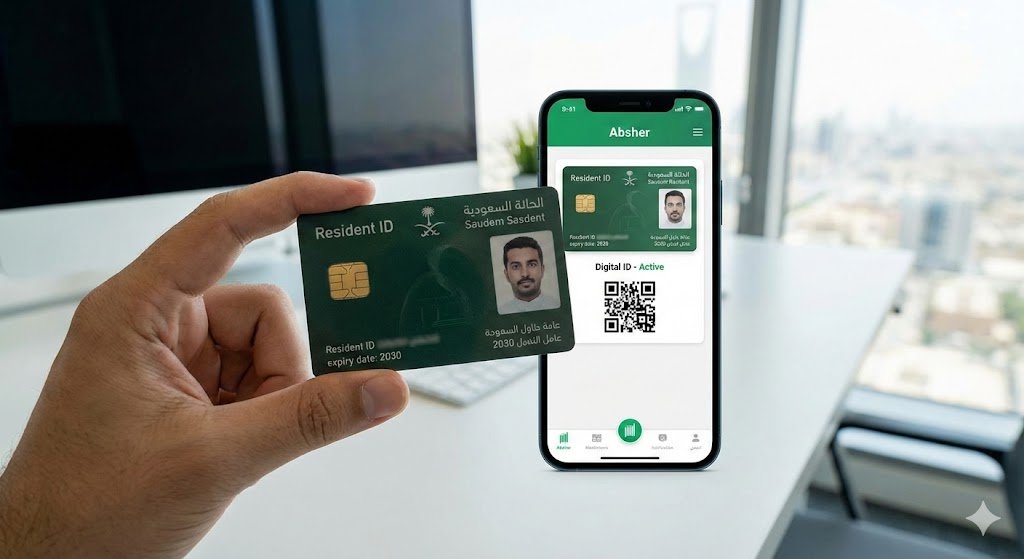

In a landmark move that aligns perfectly with Saudi Vision 2030, the Kingdom has launched a new 5-Year Resident ID, a game-changing update designed to slash red tape, eliminate over 65 million annual office visits, and streamline life for the country’s 13 million expatriates.
For decades, the life of an expatriate in Saudi Arabia was marked by a predictable, often tedious annual ritual: the renewal of the Iqama (Resident ID). It meant paperwork, coordination with HR, and frequently, physical visits to government offices to replace a plastic card that looked exactly like the one before it. But as we head into 2026, that era is officially over.
This isn’t just a change in plastic; it is a complete overhaul of how residency is managed in the Kingdom. Whether you are a business owner, a skilled professional, or a family sponsor, here is everything you need to know about the new system, how to use it, and why this sets the standard for digital government services in 2026.
The New Standard: One Card, Five Years
The General Directorate of Passports (Jawazat) has officially shifted from the annual card replacement model to a five-year validity for the physical Resident ID card.
Under the old system, even if your residency was renewed online, the physical card often needed updating or carried an expiry date that caused confusion at banks and airports. The new “Muqeem” ID card is valid for a full five years from the date of issuance.
- Read more:-
- Japan Needs 820,000 Foreign Workers for 2026
- How to Get Portugal’s Digital Nomad Visa (D8)
- Estonia Employment Visa: Step-by-Step Guide
- New Zealand’s New Seasonal Visas
- Saudi Arabia Tourist Visa: The Ultimate Guide
Key Difference:
- The Physical Card: Valid for 5 years. You do not need to replace it every year.
- The Residency Status: This is still renewed annually (or quarterly) digitally. The validity of your stay is now verified online by police, banks, and border control, not just by looking at the date printed on your card.
This separation of “Card Validity” and “Residency Validity” is the secret engine behind the efficiency. It means you keep the same ID in your wallet until 2030, while your employer manages the fees and legality in the background.
Why This Matters: Slashing 65 Million Visits
The government’s data on this initiative is staggering. By eliminating the need to print and collect a new card every year for 13 million people, the Kingdom expects to save:
- 65 Million physical trips to government or post offices over five years.
- Millions of work hours previously lost to administrative leave.
- Significant material costs in plastic and printing.
This move is part of the broader Digital Government Strategy, which aims to make 100% of government services accessible remotely by 2026.
How It Works: The “Absher” and “Muqeem” Ecosystem
The entire process is managed through the Kingdom’s two primary digital portals. To benefit from this, you must have an active account on the official platforms.
1. For Individuals and Families (Absher)
If you are sponsoring your family (wife and children) or domestic workers, you no longer need to visit Jawazat to print their IDs.
- The Process: Log in to the [suspicious link removed].
- Navigate to: Services > Passports > Saudi Post (SPL) Delivery.
- Action: When you issue the new 5-year card, you simply request delivery to your home address via “Wasil”. The card arrives at your door, and you are set for half a decade.
2. For Businesses (Muqeem)
Companies manage this through the Muqeem Portal, which is designed for organizations. HR departments can now issue these 5-year cards for employees in bulk.
- The Benefit: HR managers no longer need to send PROs (Public Relations Officers) to government offices daily. A courier collects the printed cards and delivers them to the company HQ.
The Financials: Fees vs. Levies (Vital Clarification)
There is often confusion regarding the costs. It is important to distinguish between the Card Fee and the Residency Fee.
- The Card Fee: Reports indicate a one-time fee for the 5-year card issuance (approx. SAR 500 for professionals). This covers the physical document production for the full five-year period.
- The Expat Levy & Work Permit Fees: These have not vanished. You (or your employer) must still pay the annual work permit fees (approx. SAR 9,600) and expat levies.
- The “2026” Payment Flexibility: A major benefit continuing into 2026 is the ability to pay these expensive levies in quarterly installments rather than one lump sum. This relieves massive cash-flow pressure on small businesses.
You can verify all fee structures and payment status directly through the Ministry of Human Resources and Social Development (MHRSD) website or the Qiwa platform.
Delivery to Your Door: The Role of SPL
A critical partner in this initiative is Saudi Post (SPL). The system relies entirely on the “National Address” infrastructure.
To receive your new 5-year ID, you must have a registered National Address. If you haven’t updated yours recently, do it immediately at the Saudi Post (SPL) Official Website. The government has made “Wasil” (delivery) the mandatory channel for receiving documents, effectively closing the counters for simple pickups.
The “Digital ID” Alternative
While the 5-year plastic card is great, the Digital ID is the future.
By 2026, carrying the plastic card will become optional for most internal transactions. You can already access a digital version of your Resident ID via the Absher App.
- Pro Tip: If you are stopped at a checkpoint or entering a government building, showing the “Digital ID” QR code from the Absher App is legally equivalent to showing the plastic card. This is fully ratified by the Ministry of Interior.
Summary: The 2026 Outlook for Expats
Saudi Arabia is rapidly becoming one of the most digitized nations in the world. This move to a 5-year ID is a signal that the Kingdom values the time and contribution of its residents.
For the Expat in 2026, this means:
- Less Stress: No more panic when you realize your card expires next week; the card is valid, you just check the status online.
- More Stability: A 5-year document provides a psychological sense of long-term stability, even if the legal status is renewed yearly.
- Global Mobility: The 5-year card removes the hassle of proving residency validity to foreign embassies when applying for tourist visas to Europe or the UK, as the card expiry date is no longer a limiting factor.
As we move deeper into the Vision 2030 timeline, expect more services to move from “Counter” to “Cloud.” If you haven’t yet, register your biometrics and National Address today—they are your keys to the Kingdom in 2026.