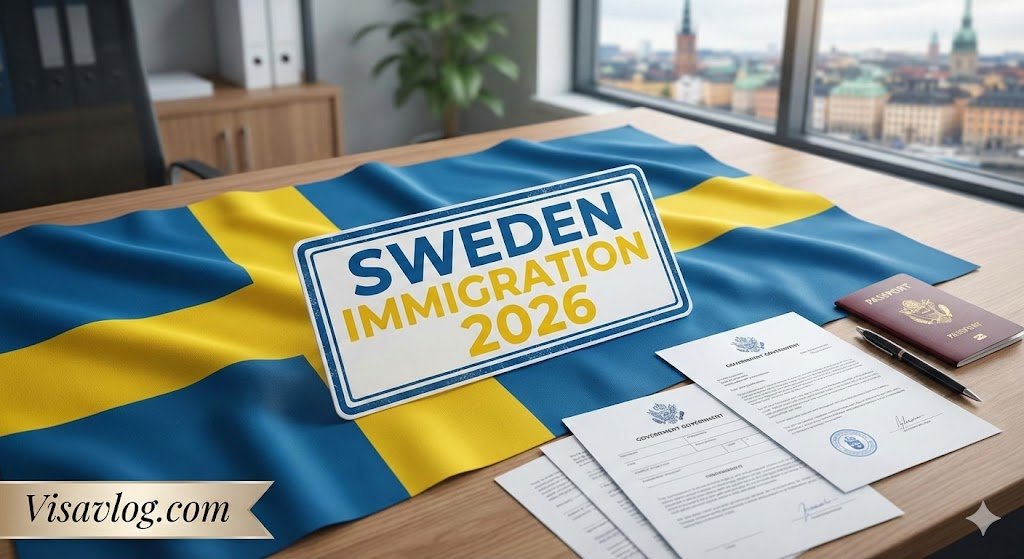

Stay updated with the major Sweden immigration changes coming in 2026. From the new SEK 350,000 repatriation grant and SEK 33,390 work permit salary threshold to stricter citizenship rules and the end of drop-in services at Migrationsverket, get the latest official news and 2026 roadmap for immigrants on Visavlog.com.
The Swedish migration landscape is undergoing a significant transformation as we enter 2026, with the government and the Swedish Migration Agency implementing a “paradigm shift” in policy. Starting January 1, 2026, several major updates will take effect, including a record-breaking increase in the repatriation grant to SEK 350,000, the official closure of drop-in service centers, and stricter requirements for Afghan travel documents. Furthermore, mid-2026 will see a substantial hike in the work permit salary threshold to SEK 33,390 and a proposed extension of the residency requirement for citizenship from five to eight years. These measures are designed to prioritize high-skilled labor and enhance integration, making it vital for all foreign nationals to stay updated via official Government of Sweden sources.
1. Permanent Closure of Drop-in Services
As of January 1, 2026, the Swedish Migration Agency will no longer accept unscheduled “drop-in” visits at its service centers. This change is a move toward a fully digital and appointment-based system to manage the high volume of applications more efficiently.
- Affected Locations: Service centers in Boden, Gothenburg, Malmö, Norrköping, Stockholm/Sundbyberg, Växjö, Västerås, Umeå, Sundsvall, and Örebro will officially end walk-in services.
- Mandatory Appointments: If you need to submit biometrics (fingerprints and photos) for a residence permit card or undergo an identity check, you must book an appointment online or wait for an official summons.
- Role of Service Centers: For general guidance on digital services or help with applications, visitors will be referred to the National Government Service Centre, which is expanding its collaboration with the Migration Agency to provide in-person support at 35 locations.
2. Record-Breaking Repatriation Grant: SEK 350,000
In a landmark decision, the Swedish government has finalized a new ordinance to encourage voluntary return for those with protection status. This grant is intended to provide a financial “restart” for individuals who wish to return to their home countries.
- New Grant Amounts: Starting January 1, 2026, single adults can receive SEK 350,000. Children are eligible for SEK 25,000 each.
- Household Limits: A married or cohabiting couple is capped at SEK 500,000, while the total grant for a single household cannot exceed SEK 600,000.
- Phased Payments: To prevent fraud, the grant is paid in three stages: 20% while still in Sweden, 40% upon arrival in the home country, and the final 40% after 15 months of residence abroad.
- Eligibility: This applies to refugees, quota refugees, and those with subsidiary protection who received residency on or before September 12, 2024. You can find the full eligibility criteria on the official Repatriation Grant page.
3. Higher Salary Threshold for Work Permits (June 2026)
For labor migrants, the bar for entry and extension is being raised again. Following the successful implementation of the 80% median wage rule, the government is moving toward a 90% threshold to ensure that foreign labor does not undercut local wages.
- The New Minimum: Effective June 1, 2026, the salary requirement for a work permit will rise from the current SEK 29,680 to SEK 33,390.
- Median Wage Calculation: This figure represents 90% of the Swedish median wage as reported by Statistics Sweden (SCB).
- Renewals and Extensions: Applicants are strongly advised to review their employment contracts now. If your current salary is below the upcoming threshold, you may face a rejection when applying for an extension in the second half of 2026.
- Employer Obligations: Employers must still ensure that wages and insurance remain in line with collective bargaining agreements, even if the salary is above the state-mandated minimum.
4. Strict Policy Update for Afghan Nationals
The Swedish Migration Agency has updated its assessment of the administrative situation in Afghanistan. Since December 4, 2025, Afghan nationals no longer have an “automatic” right to a Swedish Alien’s Passport (främlingspass).
- The Change: Migrationsverket now assesses that the Afghan authorities are capable of issuing national passports within a reasonable time.
- Individual Assessment: Each application for an Alien’s Passport will now be reviewed individually. Applicants must demonstrate they have attempted to obtain a passport from an Afghan embassy or consulate before Sweden will intervene.
- Protection for Women: Recognizing severe gender discrimination, the Agency does not require Afghan women or girls to travel to Afghanistan to obtain a passport. If they cannot get one from a consulate abroad, they may still be eligible for Swedish travel documents.
5. Upcoming Paradigm Shift in Citizenship Rules
While the legislation is still being finalized, a major report published in early 2025 has set the stage for much stricter citizenship requirements expected to take legal force on June 1, 2026.
- 8-Year Residency Rule: The proposed law increases the residency requirement from 5 years to 8 years for most naturalization applicants.
- Language and Civic Tests: For the first time, applicants will likely be required to pass formal exams in the Swedish language and demonstrate knowledge of Swedish society and culture.
- Maintenance Requirement: Similar to work permits, citizenship applicants may soon need to prove they have been self-sufficient and have not relied on long-term social welfare before being naturalized.
- Loyalty Pledge: The government plans to introduce a formal ceremony and a “loyalty pledge” to the Swedish state as part of the naturalization process.
Summary of Deadlines for 2026
| Change | Date | Source/Reference |
| End of Drop-ins | January 1, 2026 | Migrationsverket News |
| New Repatriation Grant | January 1, 2026 | Ordinance 1984:890 Update |
| Salary Threshold Hike | June 1, 2026 | Work Permit Maintenance |
| Citizenship Reform | June 1, 2026 | Government Inquiry 2025 |
Conclusion
The year 2026 marks a turning point for immigrants in Sweden. Whether you are a high-skilled worker aiming for the new salary threshold, a protection seeker considering the repatriation grant, or a long-term resident preparing for citizenship, compliance with the new rules is essential. Always verify your status through VisaVlog.com and the official government links provided.