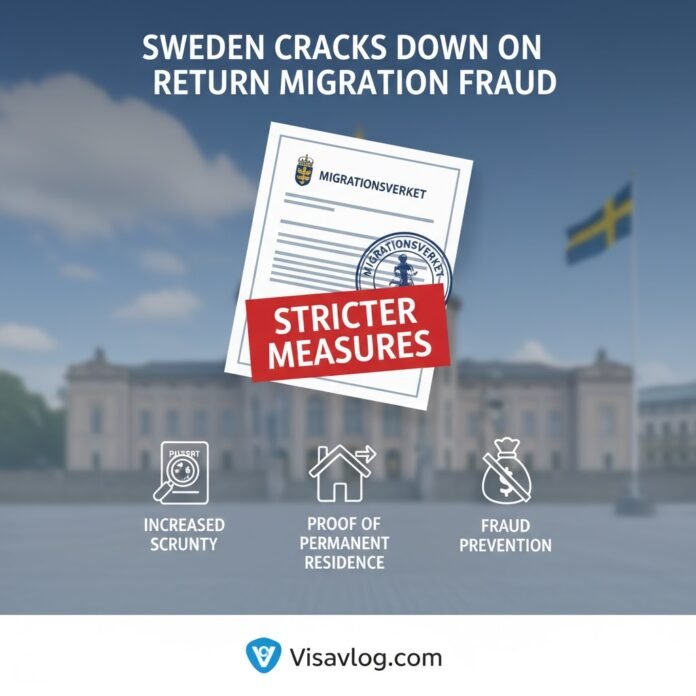


Sweden is embarking on a significant legislative overhaul aimed at creating a more restrictive and purposeful immigration framework, specifically targeting family reunification. Following a recent governmental review, a comprehensive set of proposed changes are expected to come into effect on January 1, 2027. These new rules will fundamentally alter the requirements for both new applicants and those already living in the country who wish to extend their residency based on family ties.
The Tightening of the Maintenance Requirement
One of the most far-reaching proposals concerns the financial maintenance requirement. This condition is the cornerstone of the new policy, establishing a higher financial bar for individuals wishing to bring family members to Sweden. Crucially, the requirement is set to be tightened and, in a major departure from previous practice, will now also apply when family members apply for an extension of their residence permits.
This extension is a critical change. It means that the financial stability of the sponsoring person will be assessed not just at the initial application stage, but repeatedly when the family member seeks to renew their stay. This aims to ensure that family units remain financially self-sufficient throughout their residency in Sweden.
- Read also
- Portugal’s Citizenship Path Doubles: New Law Extends Residency to 10 Years
- How to get a Swedish Schengen Visa (90-Day Visitor)
- Sweden : Your Guide to the Job Seeker or Startup Visa/Permit
- Portugal’s Citizenship Path Doubles: New Law Extends Residency to 10 Years
- How to get a Swedish Schengen Visa (90-Day Visitor)
- Sweden : Your Guide to the Job Seeker or Startup Visa/Permit
However, the proposal introduces a key mechanism to soften this impact during extension applications: the family member’s own income will be considered when determining if the maintenance requirement is met. This provides a clear pathway for families to meet the financial threshold as the sponsored individual enters the workforce. Furthermore, the ability to claim exceptions to the maintenance rule will be severely limited, often requiring “exceptional reasons” to be approved, underscoring the severity of the new standard.
New Hurdles for Sponsors on Temporary Permits
The status of the sponsoring family member in Sweden is also subject to heightened scrutiny. While the rules remain straightforward for Swedish or Nordic citizens (who generally only need to be residing in Sweden), the conditions for individuals with temporary residence permits are becoming much stricter.
Under the new proposals, a sponsor who holds a temporary permit must now satisfy two significant criteria to act as a sponsor:
- Their permit must have a validity of at least one year.
- They must be able to demonstrate a well-founded prospect of being granted permanent residence in the near future.
This aims to stabilize the immigration process by ensuring that sponsors themselves have a secure and long-term connection to Sweden before they can bring their family members over. It is a clear step towards prioritizing stability and legal certainty within the migration system.
Narrowing the Definition of the Family Circle
The investigation also proposed making the rules regarding the definition of a family circle more restrictive. This change is particularly relevant for those who apply for permits based on a relationship that is yet to be formalized, such as fiancés or partners planning to marry or cohabit after arrival. The updated framework is designed to provide greater scope for authorities to deny residence permits in cases where the circumstances surrounding the relationship are deemed complex or do not clearly meet the new, stricter criteria for family formation. This shift grants the Swedish Migration Agency more robust tools to manage applications for family formation and prevent potential misuse of the system.
Implications for Work Permit Holders and Dependents
For individuals coming to Sweden on work permits, specific changes are proposed for their dependents. The maximum age for accompanying children who can be included in the application is set to be lowered from 21 years to 18 years. This is a significant adjustment that means children aged 18, 19, or 20 may no longer be considered dependents for a standard work permit application and would likely need to apply for a separate type of permit based on other grounds, such as study or their own work.
The new rules also include a welcome adaptation for a specific group: young adults who moved to Sweden as minors with their parents and have turned 18 while in the country. The proposed regulations aim to make it easier for this group to be granted extended residence permits during a transitional period if they remain dependent on their family. This pragmatic approach seeks to mitigate the disruption for families who are already established in the country while their children transition into adulthood.
Summary and Call to Action
The overall effect of these comprehensive proposals is to push the Swedish immigration system towards greater clarity, control, and stability. The changes, particularly the extended maintenance requirement and the stricter sponsor conditions, demand meticulous planning and documentation from all applicants. Individuals and businesses relying on family immigration for recruitment must prepare well in advance for these demanding new requirements to ensure a smooth transition and successful application process under the rules taking effect in early 2027.