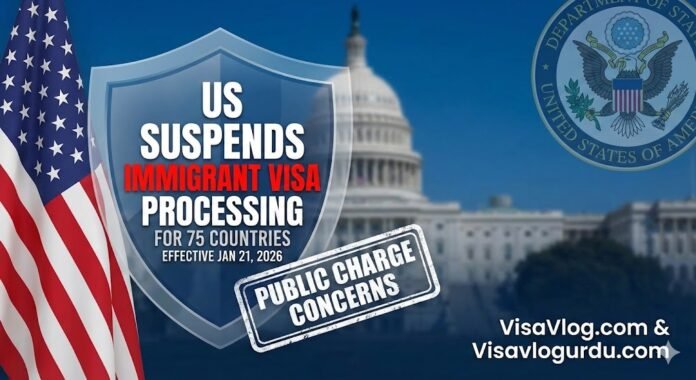


The U.S. Department of State and Congress are evaluating 2026 legislative proposals that could require Americans to hold only one passport. This report explores the potential shift in U.S. nationality laws and the impact of the Exclusive Citizenship Act on dual nationals worldwide.
As of January 2026, the introduction of the “Exclusive Citizenship Act” has sparked a global debate, suggesting that U.S. citizens may soon be required to hold only one passport to ensure “sole and exclusive allegiance” to the United States. This comprehensive report explores the potential shift in U.S. nationality laws, the security rationale behind the proposal, and the profound legal and personal implications for dual nationals worldwide, providing verified information based on official sources like Travel.State.Gov and Congress.gov to help you stay informed about your legal status and passport requirements in 2026.
The Exclusive Citizenship Act: A Strategic Shift in American Policy
For decades, the United States has maintained a flexible, albeit unofficial, stance on dual citizenship. While the U.S. Government does not formally encourage dual nationality due to potential conflicts of interest, it has long recognized the status. However, the legislative landscape shifted dramatically in early 2026 with the introduction of the Exclusive Citizenship Act.
This proposal argues that the privilege of American citizenship should be “all or nothing.” The core of the bill suggests that holding a second passport creates a “divided allegiance” that can be exploited in matters of national security, taxation, and legal jurisdiction. If enacted, this policy would represent the most significant change to the Immigration and Nationality Act (INA) in over half a century.
- Read More
- Sweden: Differences in Residency, Renewal, PUT, and LTR
- UK Visitor Visa: A Comprehensive Guide to Procedures
- US Green Card Application: What if It Is Pending?
- Canada: Your Guide to Temporarily Work with Employer Permits
- Germany Welcomes More Skilled Immigrants (2025 Update)
Key Provisions of the Proposal
The 2026 proposal introduces several strict mandates that would force citizens to make life-altering decisions regarding their identity and global mobility:
- Mandatory Election of Citizenship: Individuals currently holding dual nationality would have a grace period—proposed as one year—to decide which citizenship to retain. Choosing to remain a U.S. citizen would require a formal renunciation of all other foreign nationalities.
- Automatic Relinquishment: Any U.S. citizen who voluntarily acquires a foreign nationality after the law takes effect would be considered to have automatically relinquished their American status.
- The “One Passport” Rule: All U.S. citizens would be legally barred from possessing or using a foreign travel document. Entry and exit from the United States would be monitored via a centralized federal registry to ensure compliance.
National Security and the Rationale for “Sole Allegiance”
The primary driver behind this 2026 initiative is the protection of national interests. Federal agencies, including the Department of Homeland Security (DHS), have noted that dual nationals often navigate global travel using multiple documents, which can obscure their travel history and complicate vetting processes.
Proponents of the bill emphasize that “exclusive citizenship” is essential for:
- Preventing Jurisdictional Conflicts: Avoiding situations where a U.S. citizen claims foreign consular protection while on U.S. soil or vice versa.
- Enhancing Vetting Protocols: Ensuring that all American citizens are tracked under a single biometric identity linked to a single national record.
- Preserving National Identity: Strengthening the social contract between the citizen and the state by requiring an undivided commitment to the U.S. Constitution.
Impact on Global Dual Nationals: Expats, Immigrants, and Children
The “One Passport” policy would not only affect naturalized citizens but also millions of “Accidental Americans” and children born abroad to American parents. The scope of this legislation is global, affecting residents in Europe, Asia, the Americas, and the Middle East.
Comparative Analysis: Current vs. Proposed Policy
| Feature | Current U.S. Policy (Pre-2026) | Proposed Exclusive Citizenship Act |
| Number of Passports | Multiple allowed (U.S. + Foreign) | Strictly only one (U.S. only) |
| Travel Requirements | Must enter/exit U.S. on U.S. passport | Must use U.S. passport for all global travel |
| Foreign Naturalization | Does not automatically end U.S. status | Triggers automatic loss of U.S. citizenship |
| Renunciation | Usually voluntary and complex | Mandatory for existing dual citizens |
| Federal Tracking | Decentralized records | Centralized Federal Registry of Dual Nationals |
The Socio-Economic Consequences
For many, a second passport is more than just a travel document; it is a key to property rights, inheritance, and business ownership in their country of origin.
- Property Rights: Many nations restrict land ownership to their own citizens. Forced renunciation could lead to the loss of family estates and ancestral land.
- Professional Mobility: Expats working for international organizations often rely on their second nationality for work permits and ease of movement within regional blocs like the EU or ASEAN.
- Family Unity: Dual citizenship often facilitates easier family reunification and the ability to care for elderly parents abroad without the need for constant visa renewals.
Legal and Constitutional Challenges
Legal experts suggest that the Exclusive Citizenship Act will face immediate and rigorous challenges in the federal courts. The Supreme Court of the United States has historically ruled that citizenship is a constitutional right that cannot be stripped away by Congress without a person’s “voluntary intent” to relinquish it.
Cases like Afroyim v. Rusk established that the 14th Amendment prevents the government from revoking citizenship simply because a person voted in a foreign election or holds another nationality. However, the 2026 proposal attempts to circumvent this by redefining “voluntary intent” as the act of choosing to keep a foreign passport over a U.S. one. The resulting legal battle would likely define American civil rights for the next generation.
Implementation Risks: The Administrative Backlog
Beyond the legal hurdles, the administrative reality of forcing millions of people to renounce a citizenship within a 12-month window is daunting.
- Consular Capacity: U.S. embassies and foreign consulates already face massive backlogs for routine services. A sudden surge of millions of renunciation appointments would overwhelm the system.
- The “Statelessness” Risk: If an individual attempts to renounce a citizenship but the foreign government refuses the request, the individual could be left in a legal limbo, potentially facing “automatic” loss of U.S. status despite their efforts to comply.
- Registry Challenges: Creating a 100% accurate database of all dual citizens is a massive data-sharing undertaking that would require unprecedented cooperation between the State Department and foreign governments.
Preparing for Potential Changes in 2026
While the bill is currently a proposal, the shifting political climate suggests that travelers and citizens should be proactive. Official guidance from the Department of State recommends:
- Check Passport Validity: Ensure your U.S. passport is valid for at least the next year to avoid emergency renewals during a legislative shift.
- Use Your U.S. Passport: To maintain a clear record of compliance, dual nationals are encouraged to use their U.S. passport for all international travel whenever possible.
- Stay Informed: Monitor updates on Congress.gov for the bill’s progress through subcommittees and floor votes.
- Legal Consultation: If you hold significant assets or professional ties abroad, consult with an immigration attorney to understand how renunciation might affect your foreign tax and property status.
The 2026 “One Passport” proposal marks a pivotal moment in the history of American citizenship. It challenges the modern reality of global identity and replaces it with a traditional model of exclusive national loyalty. Whether the bill becomes law or is struck down by the courts, it has already forced a necessary conversation about what it means to be American in a connected world. As a Thought Partner at VisaVlog, we recommend that all dual nationals keep their documentation in order and follow official government channels for the most accurate, safety-first information.
Is dual citizenship currently illegal in the United States as of 2026?
The “Exclusive Citizenship Act” is currently a legislative proposal undergoing review in Congress and has not yet been enacted into law.
Until this bill passes both houses and is signed by the President, your rights as a dual national remain protected by current Supreme Court precedents.
What would happen if the “One Passport” policy is enacted into law?
Failing to comply with this mandate would result in the individual being classified as having “voluntarily relinquished” their U.S. citizenship.
Once U.S. citizenship is lost, the individual would become a foreign national, losing access to federal benefits, voting rights, and the automatic right to reside in the United States.
How would the U.S. government track if I have another foreign passport?
Additionally, U.S. passport application forms (DS-11 and DS-82) are expected to be updated with mandatory disclosure questions regarding other nationalities and travel documents.
Using a foreign passport for international travel would also trigger alerts in the CBP Biometric Entry-Exit System, making it nearly impossible to maintain a second passport without government detection.
Can children born abroad with dual citizenship keep both passports?
They would be required to choose one nationality and renounce the other to maintain their U.S. citizenship status and passport privileges.
This is one of the most controversial sections of the bill, as it affects millions of “Accidental Americans” who may have lived their entire lives outside the U.S.
Will I lose my property and inheritance rights abroad if I renounce my citizenship?
You might also lose access to local healthcare systems, pension plans, and the right to live in that country indefinitely without a visa.
It is critical to review the specific nationality and property laws of your other country and consult with an international legal specialist before making any decisions.
Can I visit the U.S. if I choose my other citizenship over the American one?
Depending on your chosen nationality, you would need to apply for a B1/B2 tourist visa or use the ESTA system if your country is part of the Visa Waiver Program.
However, there is no guarantee of visa approval, and you would be subject to strict scrutiny and stay-duration limits during every visit to the U.S.
Why is the U.S. government considering this “Exclusive Citizenship” policy now?
Proponents argue that dual citizenship complicates vetting, facilitates tax evasion, and creates jurisdictional conflicts during international legal disputes.
The goal is to simplify the legal relationship between the citizen and the state by maintaining a single, verifiable identity for every person holding a U.S. passport.